








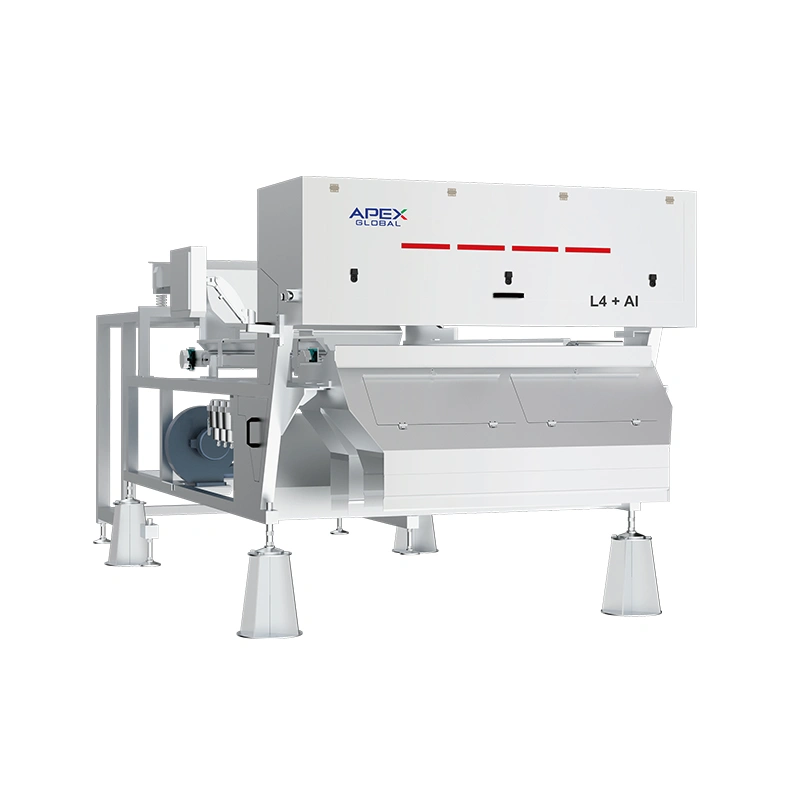
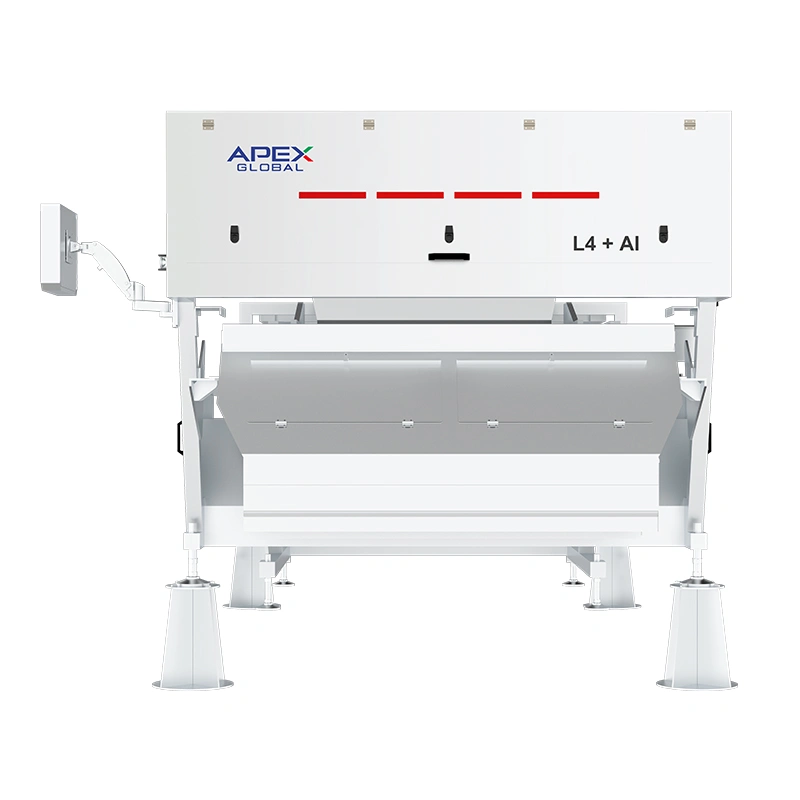
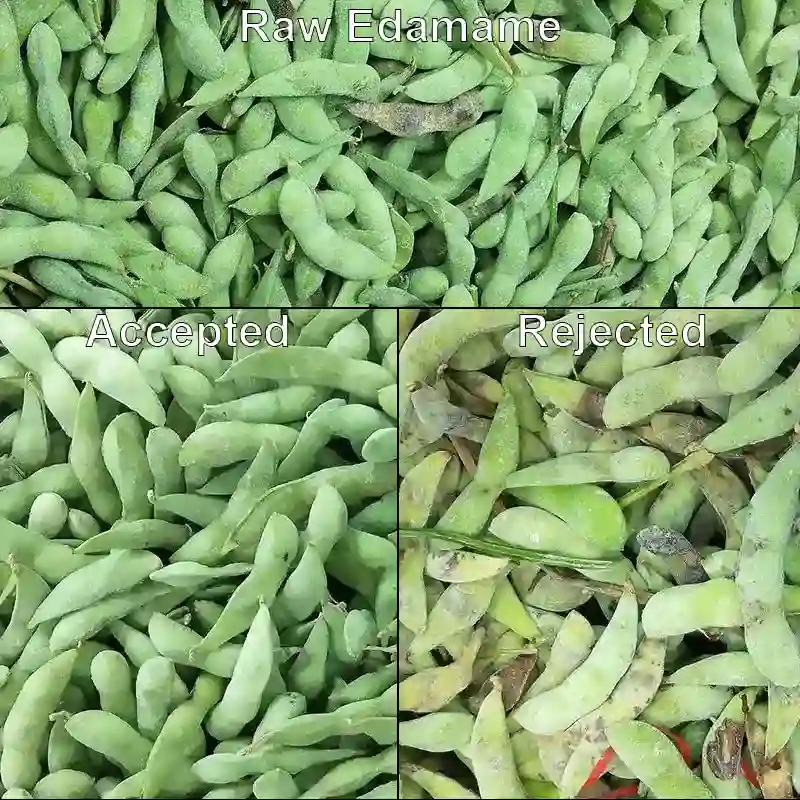
Model L4+AI Intelligent Single-layer Belt Color Sorter
Specs & Features: Single-layer belt + wet & dry dual sorting, AI micro-defect visual identification, anti-breakage conveying
APEX Food Conveyor Belt Sorting Machine for Corn Maize Soybean
Key Advantages
- AI Ultra-fine Capture of Invisible Micro Defects
- Low-wastage High-precision Dual-scenario Sorting
- Customized for High-grade Precision Production
Products Center
Contact Us
- Phone: +86 18815515040
- Email: info@apexitec.com
- WhatsApp: +86 18815515040
- Address: No. 789 Mingchuan Road, Boyan Tech Park, Hefei, Anhui, China
Product Introduction
Features of APEX Conveyor Belt Sorting Machine
The Model L+AI intelligent conveyor belt sorting machine inherits the lossless flexible conveying structure of the standard Model L unit, while being upgraded with deep learning AI vision technology. It greatly improves the fine sorting precision targeting fragile grains and frozen food raw materials, and delivers reliable sorting performance for two high-precision processing application scenarios.
AI Ultra-fine Capture of Invisible Micro Defects
Conventional belt sorting devices can only recognize obvious surface color differences. In contrast, the built-in deep learning AI algorithm precisely identifies hard-to-distinguish tiny defects: micro mold spots, fragmented incomplete grains, faint heterochromatic marks on granular materials, alongside minor frost damage and slight surface deformation existing on frozen food products.
Low-wastage High-precision Dual-scenario Sorting
This model retains the core advantage of belt-style gentle lossless transportation. The intelligent AI recognition system effectively lowers the rate of mistaken ejection of qualified products, reducing unnecessary wastage of high-value raw materials. It supports synchronous high-accuracy purification for both grain commodities and frozen food, adapting to frequent alternating multi-material batch production inside food processing plants.
Customized for High-grade Precision Production
It is ideally matched with strict production standards for premium edible grains, specialty coffee beans and top-grade frozen finished products. Model L+AI supplies stable, high-efficiency intelligent sorting solutions for high-end agricultural product manufacturers and formal frozen food processing enterprises.
Working Principle of APEX Conveyor Belt Sorting Machine
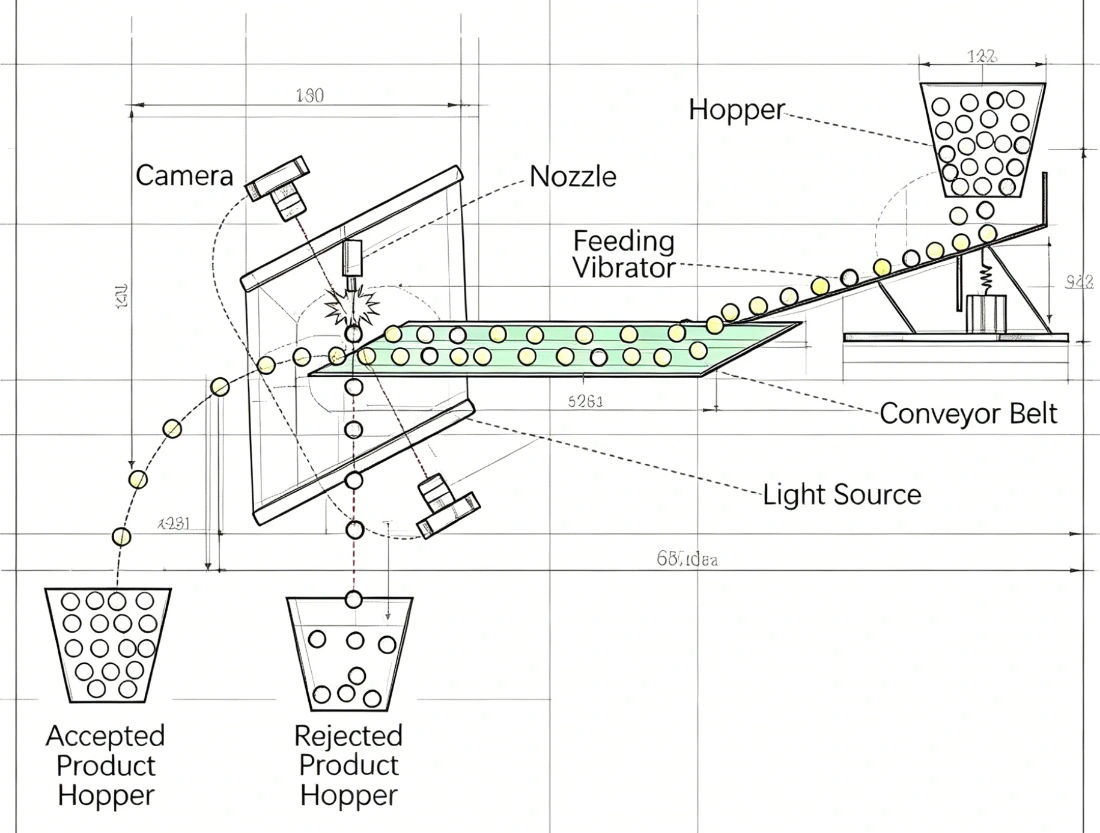
Step 1: Lossless Belt Feeding
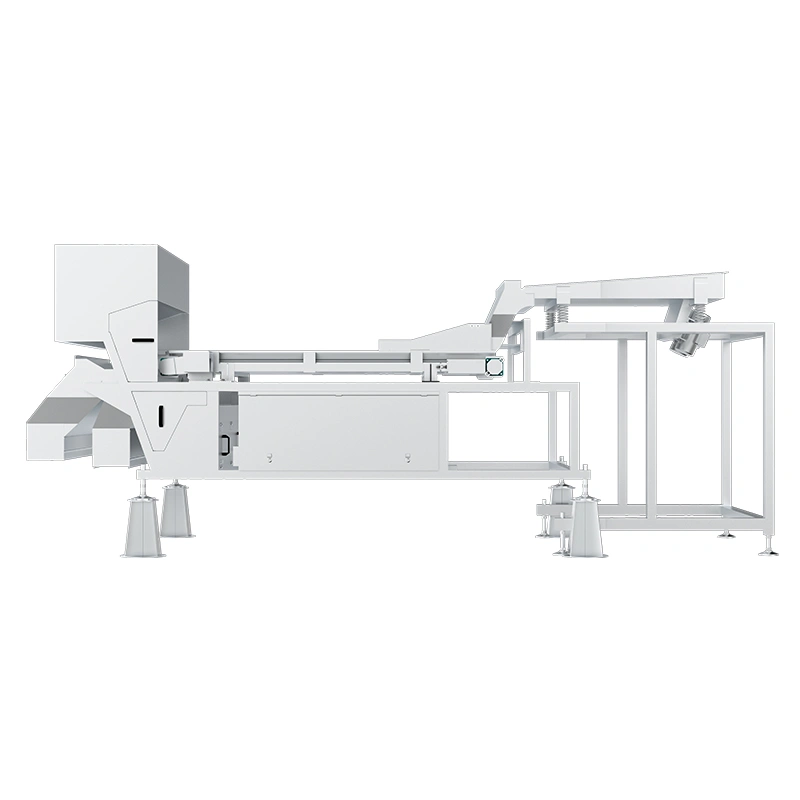
Mixed materials are evenly laid on the horizontal conveyor belt via the vibrating feeder. Low-speed belt delivery avoids impact damage to fragile beans, dried fruits and frozen particles compared with vertical free-fall sorting.
Step 2: AI-powered Image Detection
Dual CCD cameras with matched light sources capture material surface data in real time. The upgraded deep learning AI algorithm identifies subtle defects including micro mold spots, faint discoloration and frost deformation that basic CCD systems cannot detect.
Step 3: Accurate Defect Ejection
The system matches captured images against the built-in material database and triggers nozzles instantly. Defective particles are precisely blown into the reject bin, cutting false ejection rates and raw material loss.
Step 4: High-purity Product Collection
Qualified materials travel along the conveyor and fall into the finished product hopper, completing full-process low-loss, high-precision intelligent sorting for premium food processing.
Parameters of APEX Conveyor Belt Sorting Machine
| Model | L1+AI | L2+AI | L4+AI | L6+AI |
| Number of Ejectors | 64 | 128 | 256 | 384 |
| Width of Belt (cm) | 32 | 64 | 128 | 192 |
| Power (kW) | 2.9 | 3.4 | 4.4 | 5.4 |
| Voltage (V) | 180-240V 50Hz | 180-240V 50Hz | 180-240V 50Hz | 180-240V 50Hz |
| Air Pressure (Mpa) | 0.6-0.8 | 0.6-0.8 | 0.6-0.8 | 0.6-0.8 |
| Air Consumption (m³/min) | <1.0 | <1.8 | <3.5 | <5.0 |
| Weight (kg) | 780 | 1000 | 1400 | 2020 |
| Dimension (L×W×H, mm) | 3522×1285×1723 | 3805×1566×1930 | 3805×2206×1930 | 3805×2812×1930 |
Performance Comparison
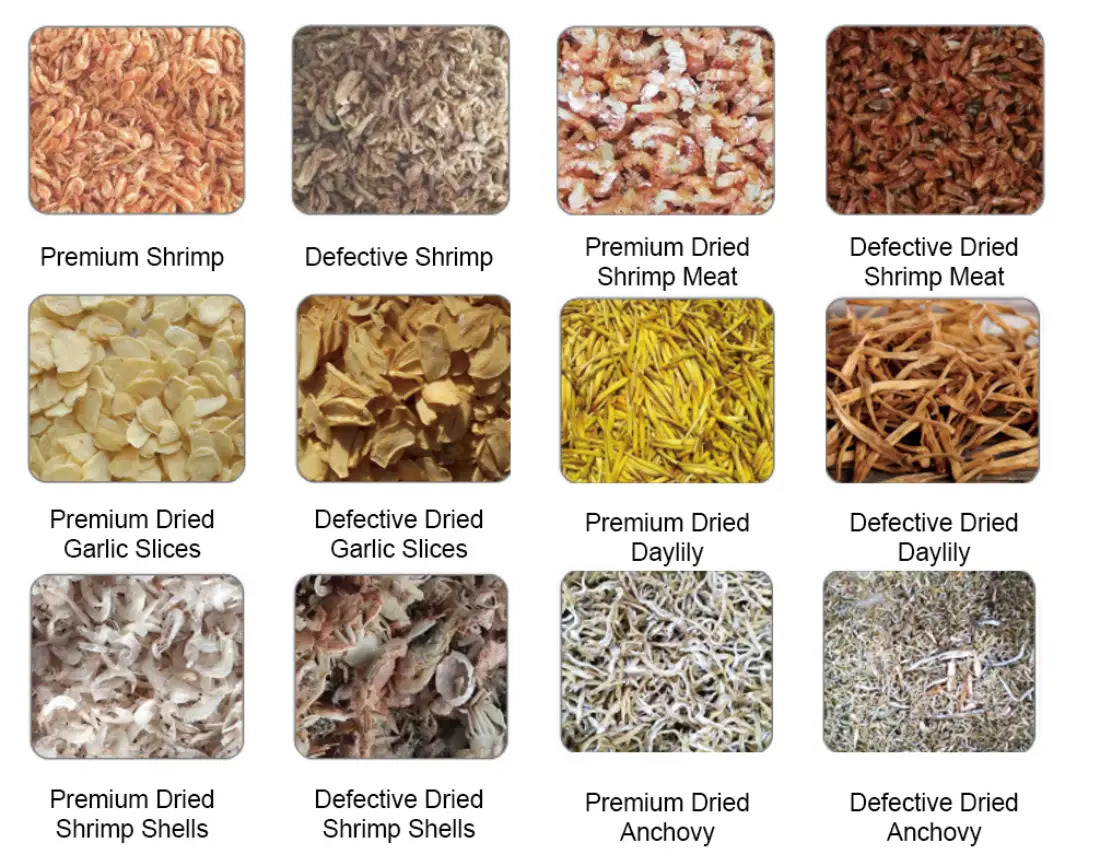
Sorting Performance for Dried Seafood & Dehydrated Agricultural Products
- Accepted Premium Materials: Complete texture, uniform natural color, free of scorch, mildew and rotten fragments. The lossless belt transportation avoids breakage of crisp dried ingredients, retaining full product integrity.
- Rejected Defective Materials: Discolored deteriorated pieces, burnt fragments, moldy particles and foreign sundries are captured and ejected by the deep learning AI model, which recognizes subtle flaws unidentifiable by ordinary CCD color sorting equipment.
Applicable Sorting Materials
Built upon the lossless flat-belt conveying foundation of standard L model, L+AI is equipped with deep learning AI visual algorithm to realize high-precision purification for fragile dried products, grain materials and frozen food.
- Dried Seafood & Agricultural Dehydrated Products
Dried shrimp, peeled shrimp meat, shrimp shells, dried anchovy, dried garlic slices, dried daylily and other crisp dry goods. The soft conveying structure prevents material fragmentation, while AI recognizes faint discoloration, mildew spots and burnt fragments that ordinary CCD cannot capture. - High-grade Grain & Dried Fruits
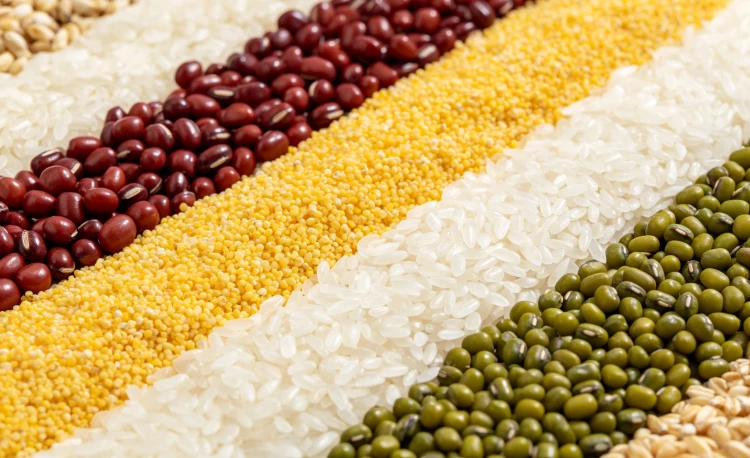
Split peas, black beans, wolfberries, raisins and other premium granular agricultural products, effectively lowering mistaken rejection rate to raise finished product yield. - Frozen Food Raw Materials
Frozen diced fruits and frozen vegetable grains, identifying slight frost damage and surface deformation for standardized frozen food processing.
FAQS
-
What hidden frozen food flaws can AI identify that regular CCD misses?
Beyond basic color difference capture of ordinary CCD cameras, the deep learning AI system pinpoints inconspicuous defects including micro frost burn, minor surface distortion and faint abnormal pigmentation on frozen beans, edamame and frozen fruits, realizing full coverage of latent bad products that traditional optical inspection cannot capture.
-
Will AI reduce finished product yield due to mistaken ejection of qualified materials?
The AI system supports pixel-level accurate targeting and jet control. It greatly cuts the false rejection ratio of intact qualified materials while fully removing defective particles, effectively lifting the finished product yield and economic benefits of frozen food production lines.
-
Is it available to switch production tasks between grain beans and frozen vegetables on a daily basis?
Equipped with self-adaptive AI material recognition algorithm, the equipment automatically matches the optimal sorting parameters according to incoming material features. Operators do not need to manually reset complicated parameters when switching processing materials, supporting flexible cross-product batch production.
-
Will the added AI hardware cause excessive heat buildup inside the optical cabinet?
The device adopts low-power embedded AI processing chips with an independent circulating heat dissipation structure. Stable internal temperature is maintained even under long-hour continuous operation inside low-temperature frozen food workshops, with zero risk of equipment overheating failure.
We strictly control the production quality of each product and meticulously process every item.
Related Products
-
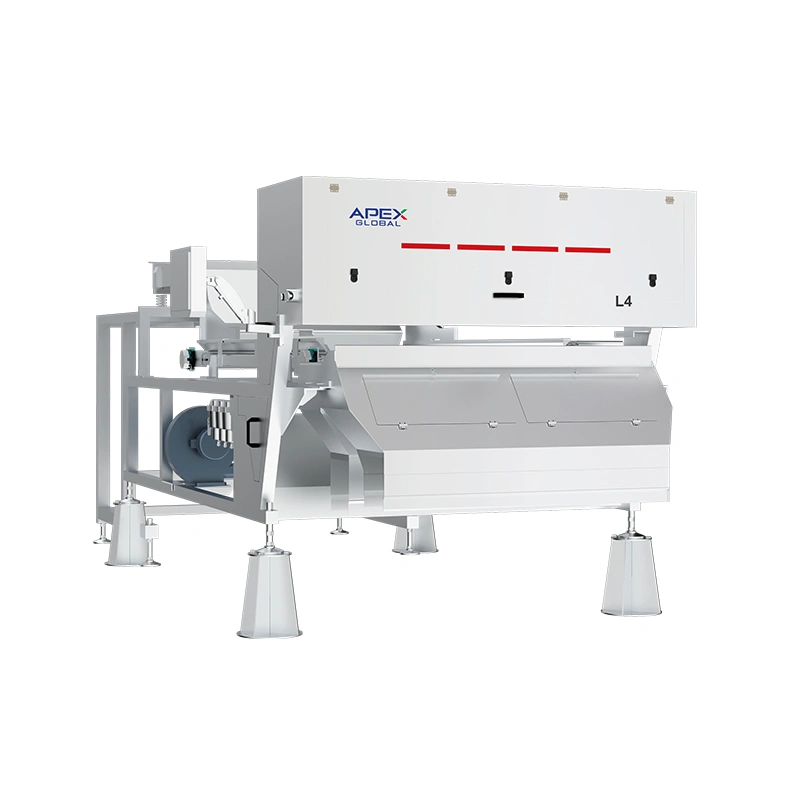
APEX Belt-Type Color Sorter for Grain Beans Pulses Raisin Pea Corn
-
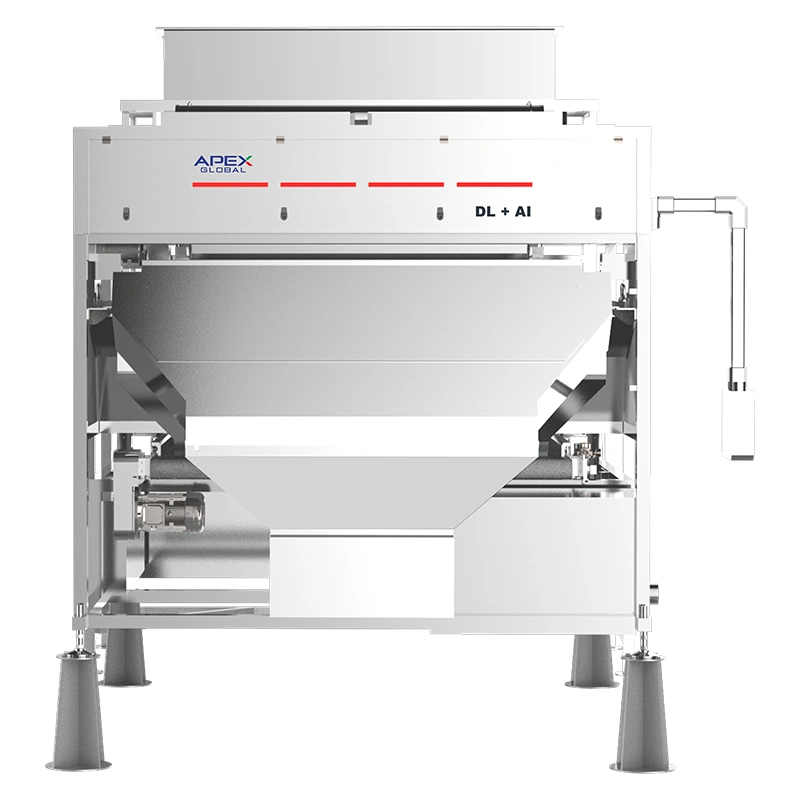
APEX AI Food-Grade Double Belt Optical Sorter for Pepper Chilli
-
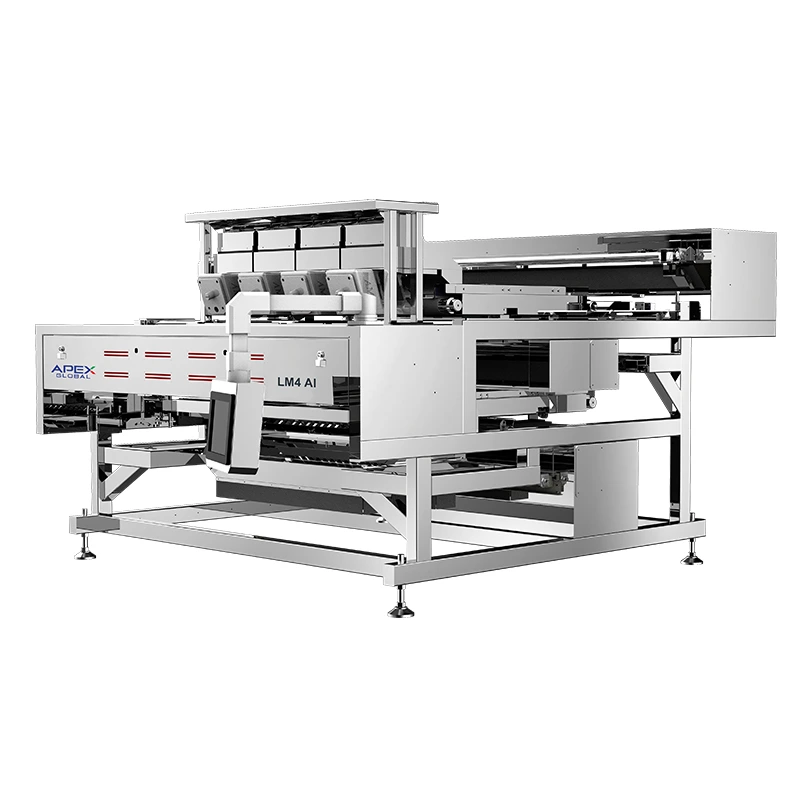
APEX Dehydrated Vegetable Fruit Sorter With AI Belt Sorting System
-
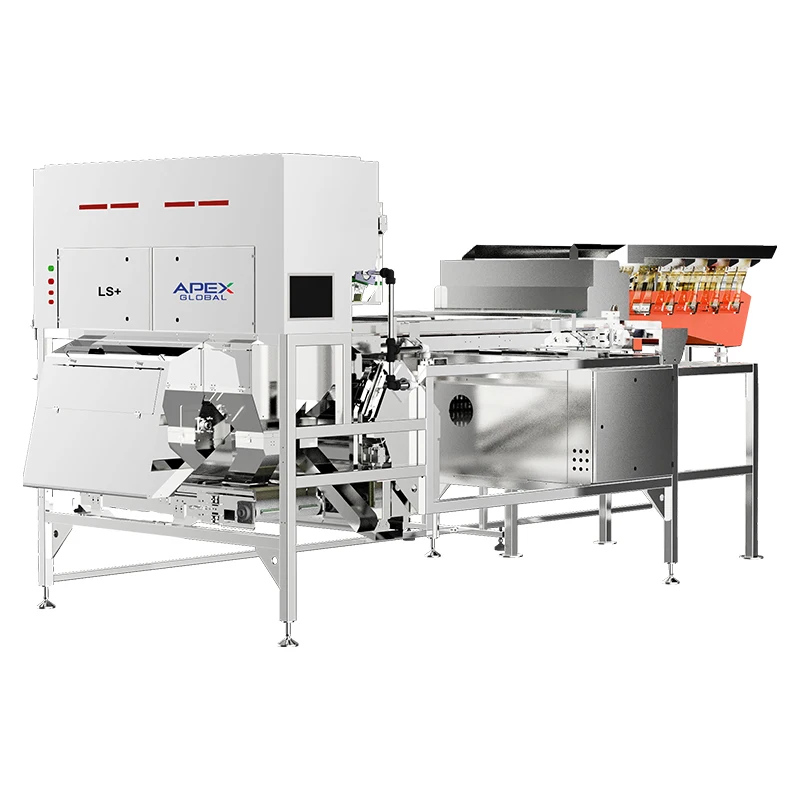
APEX Walnut Sorting Machine for Pistachio Macadamia Pecan Almond
-
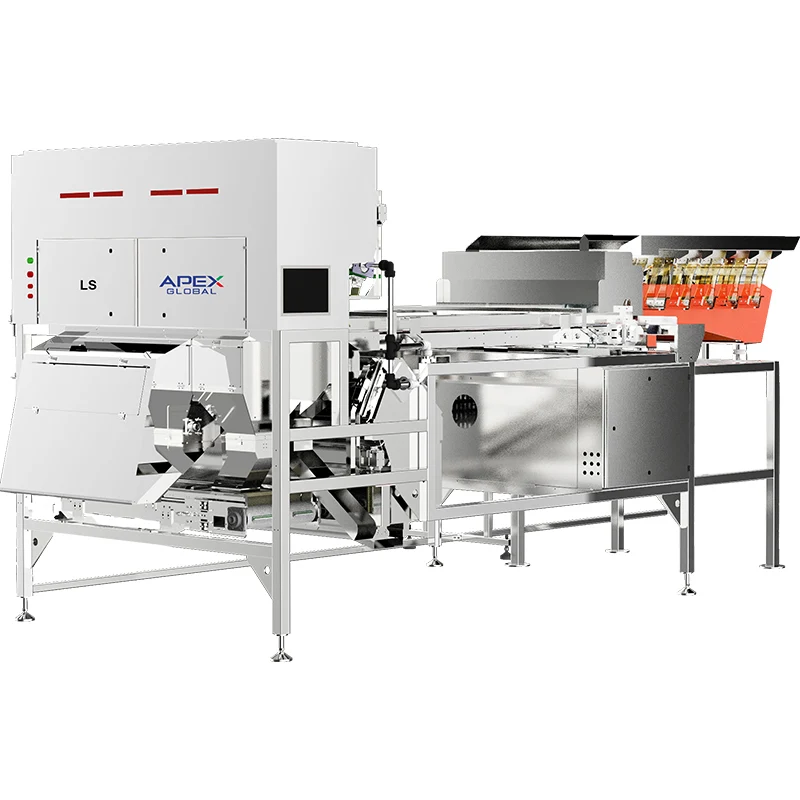
APEX High-Speed Conveyor Belt Sorter For Hazelnut Peanut Seed
-
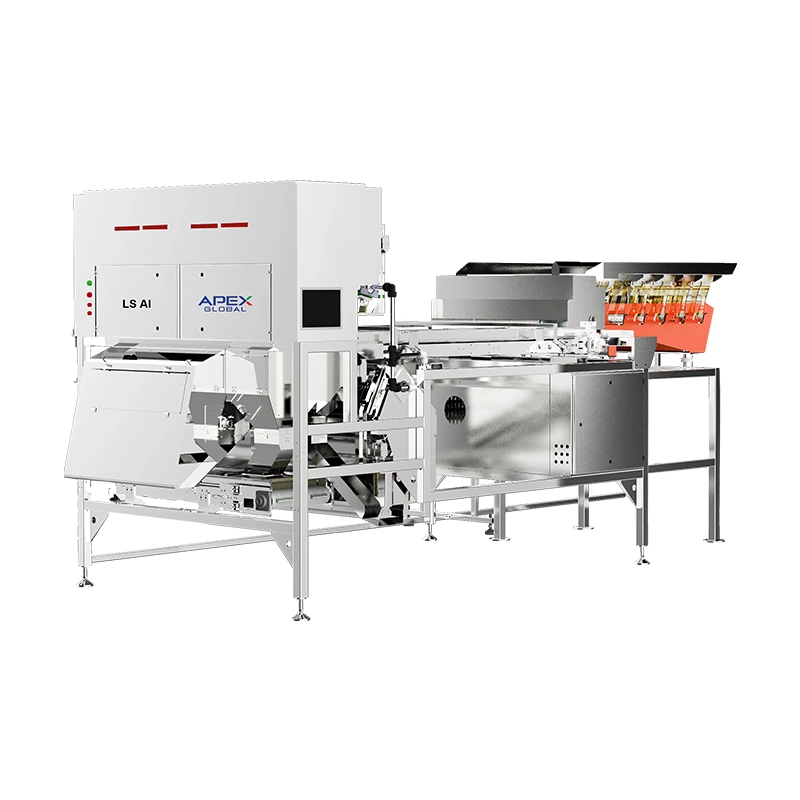
APEX Low-Breakage Fragile Nut Sorter for Cashew Nut Almond Kernel
-
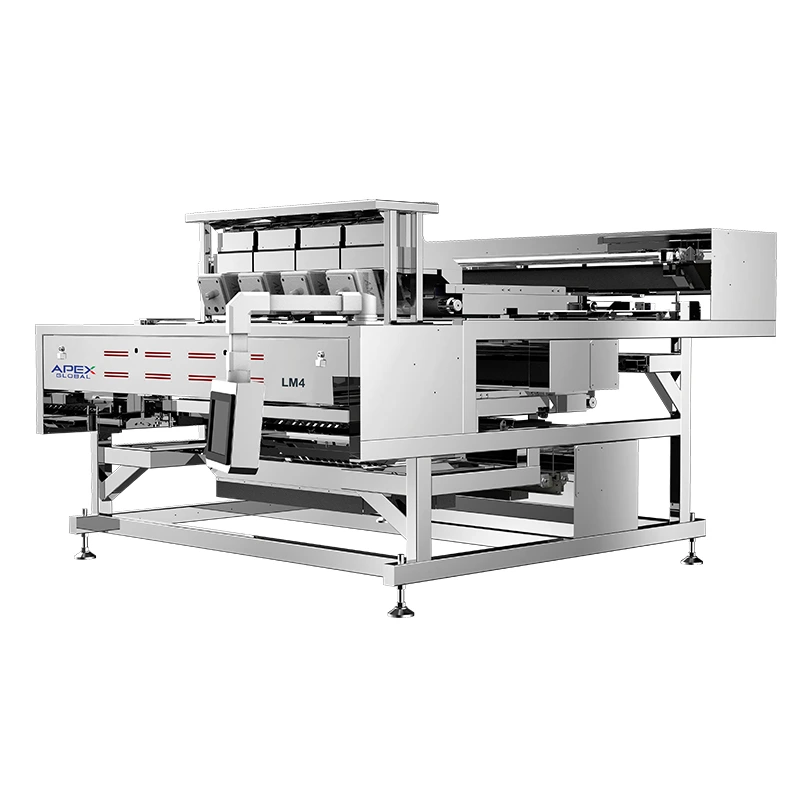
APEX Belt Low-Breakage Grain Sorter for Fragile Coarse Cereals
-
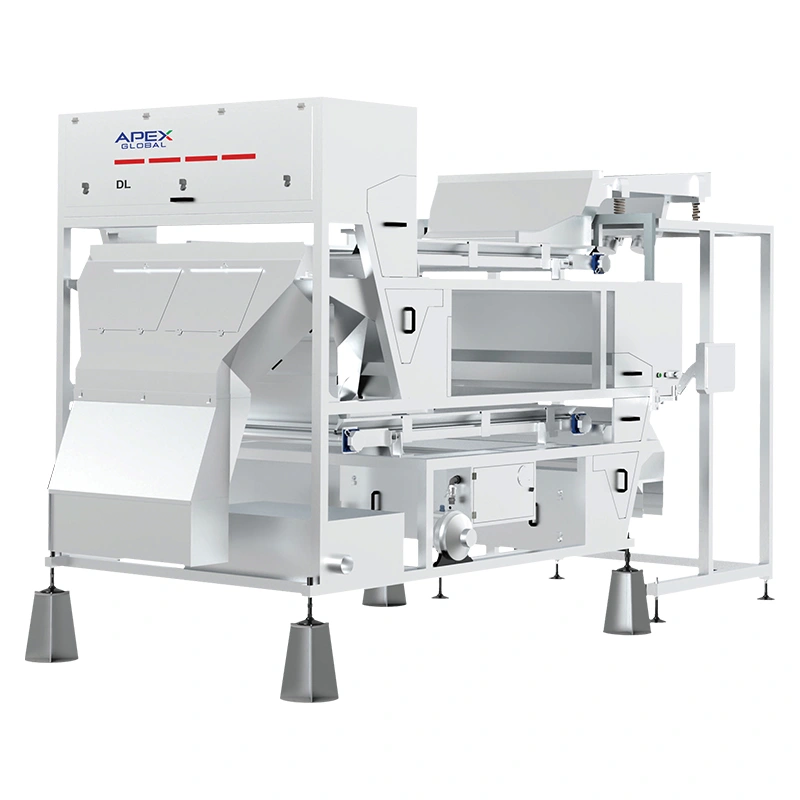
APEX Double-Layer Belt Sorter for Crop Wheat Impurity Removal