









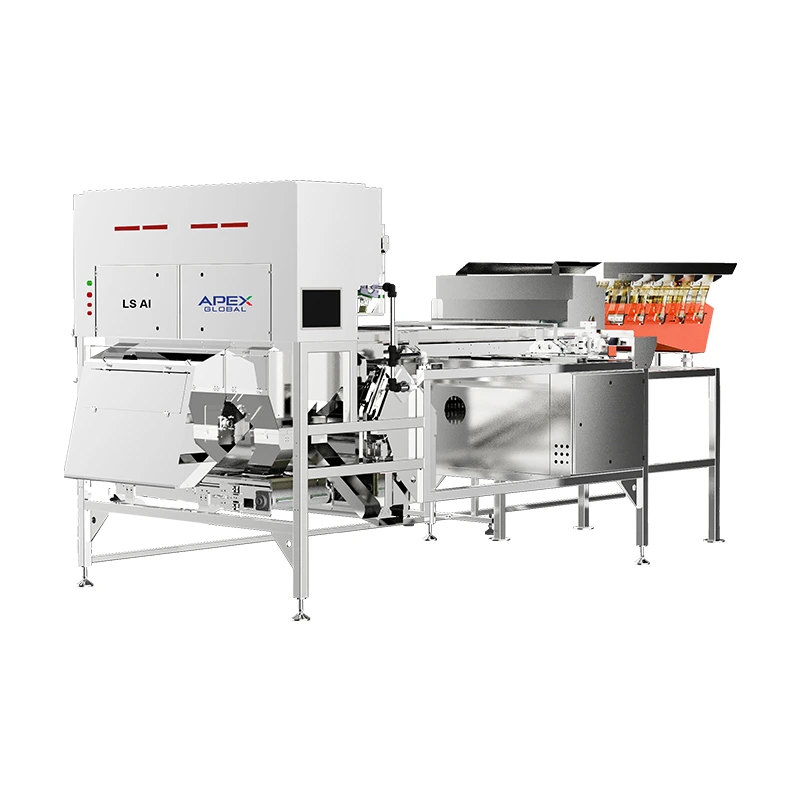
Model LS AI Intelligent Belt Nut Sorter
Specs & Features: Single-layer break-proof conveyor belt + color CCD + single-view infrared + deep learning AI, ultra-precise sorting for export-grade high-value nuts
APEX Low-Breakage Fragile Nut Sorter for Cashew Nut Almond Kernel
Key Advantages
- AI Ultra-Fine Recognition of Concealed Defects
- Adaptive Intelligent Parameter Self-Optimization
- Qualified for Rigorous Export-Grade Quality Standards
Products Center
Contact Us
- Phone: +86 18815515040
- Email: info@apexitec.com
- WhatsApp: +86 18815515040
- Address: No. 789 Mingchuan Road, Boyan Tech Park, Hefei, Anhui, China
Product Introduction
Features of APEX Low-Breakage Fragile Nut Sorter
The Model LS AI intelligent belt nut sorter combines three core strengths: flexible breakage-proof conveying, infrared internal penetration inspection, and AI deep learning recognition technology, enabling ultra-precise intelligent sorting tailored for high-end nut manufacturing.
1. AI Ultra-Fine Recognition of Concealed Defects
The AI system identifies micro flaws that cannot be captured by conventional optical nut sorting equipment, such as mild surface oxidation, miniature worm traces, localized slight mildew and inconspicuous kernel discoloration, achieving comprehensive elimination of hard-to-detect defective nuts.
2. Adaptive Intelligent Parameter Self-Optimization
Equipped with a self-learning iterative algorithm, the model continuously accumulates feature data of various nut raw materials. It autonomously adjusts operating and sorting parameters to adapt to multiple nut varieties and fluctuating complex raw material statuses on production lines.
3. Qualified for Rigorous Export-Grade Quality Standards
By thoroughly filtering out tiny defective particles and homogenizing the overall quality of finished nut kernels, this sorter fully complies with the stringent precision screening specifications required by premium nut brands and international export food standards.
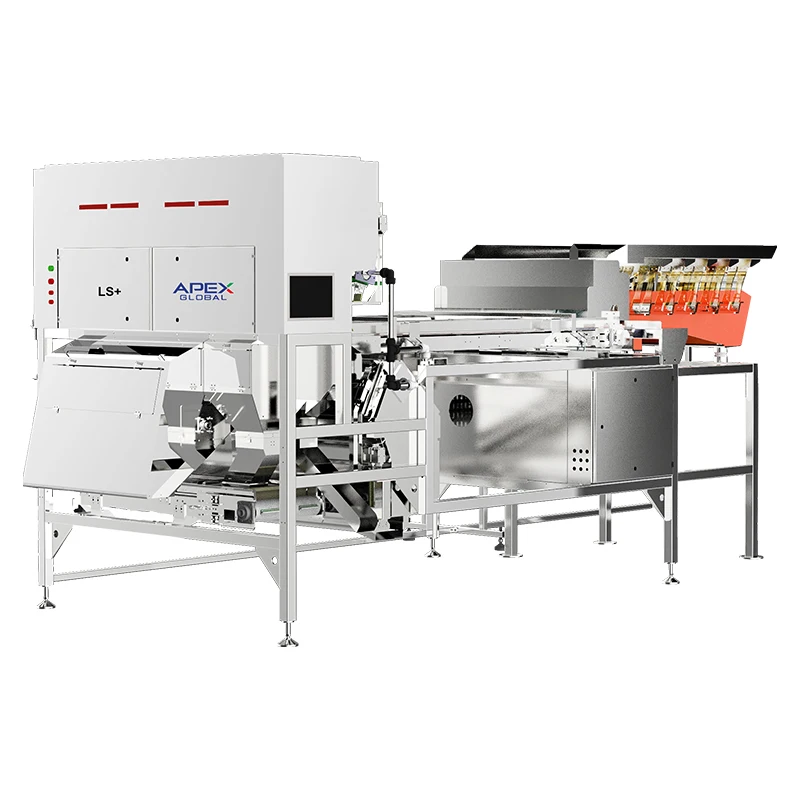
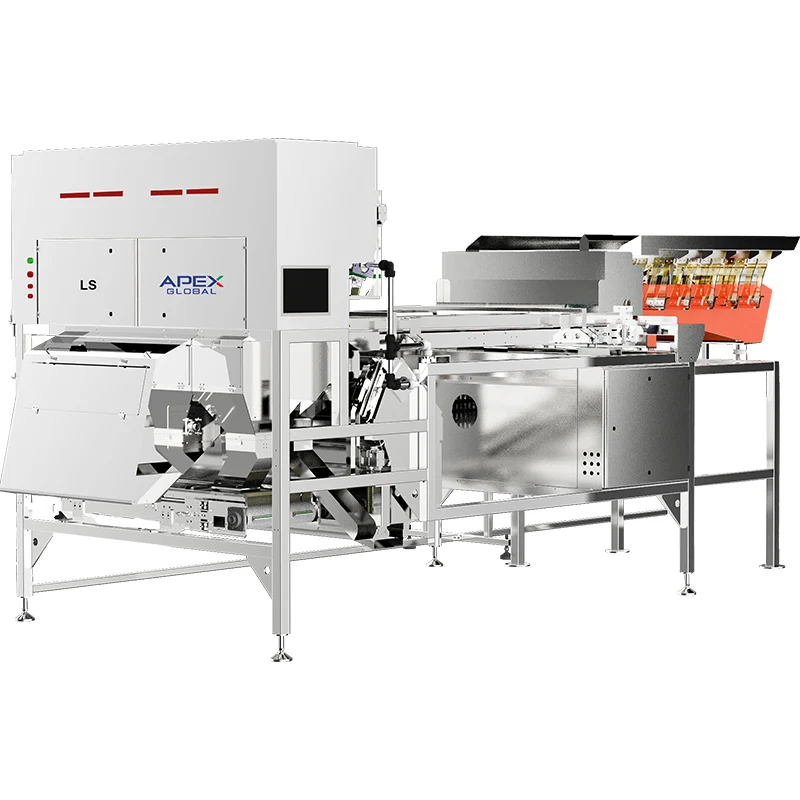
LS AI builds on the lossless conveying foundation of the LS product family. Unlike LS+ which relies on dual-view infrared hardware to eliminate detection blind spots, LS AI leverages algorithm iteration to excavate invisible subtle defects, becoming the optimal sorting equipment for enterprises producing high-value export nut products.
Working Principle of APEX Low-Breakage Fragile Nut Sorter
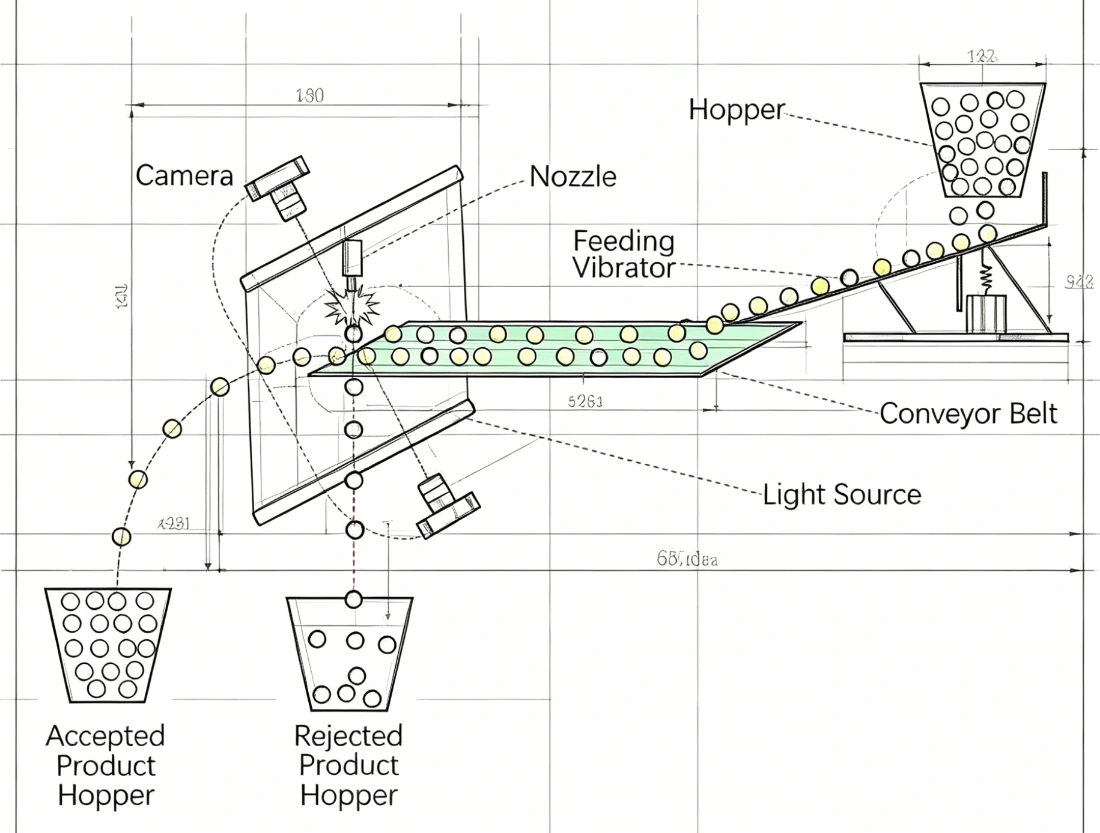
Step 1 Uniform vibration feeding & lossless belt conveying
Raw nut materials are poured into the top feeding hopper. The feeding vibrator arranges aggregated nuts evenly on the horizontal flexible conveyor belt. Nuts are laid flat for stable transportation without free falling impact and extrusion force, fundamentally reducing the fragmentation rate of nut shells and kernels and lowering raw material loss during sorting.
Step 2 CCD + infrared + AI collaborative ultra-fine defect detection
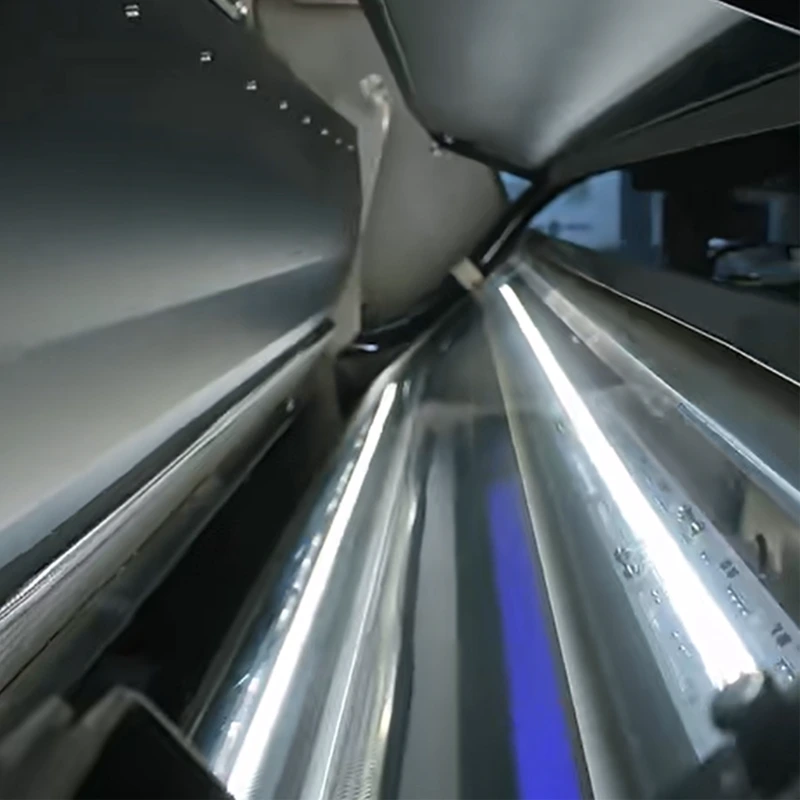
When nuts pass through the imaging detection station, the light source provides stable imaging conditions for the camera and infrared sensor. The color CCD captures surface abnormal features such as oxidation stains and discoloration; the infrared unit penetrates the nut shell to detect internal kernel deterioration. Combined with deep learning self-training algorithm, LS AI intelligently identifies tiny worm spots, slight mildew and faint kernel deterioration that cannot be identified by ordinary optical equipment to realize full-dimensional defect screening.
Step 3 Precision air blowing separation & finished material collection
After the AI system marks defective targets, high-speed nozzles execute instantaneous targeted air ejection to separate unqualified nuts into the rejected material bucket. Nuts that pass multi-dimensional intelligent detection are stably conveyed into the qualified product bucket to complete the whole intelligent high-precision sorting process.
Parameters of APEX Low-Breakage Fragile Nut Sorter
| Model | L1S AI | L2S AI | L4S AI |
| Capacity(t/h) | 0.5-1 | 1.5-3 | 3-9 |
| Voltage(v/Hz) | 380/50 | 380/50 | 380/50 |
| Power (kW) | 7.2 | 9.5 | 11.3 |
| Weight (kg) | 1180 | 1480 | 1980 |
| Dimension (L×W×H, mm) | 3500×1748×2500 | 3500×2350×2500 | 3500×2953×2500 |
Performance Comparison
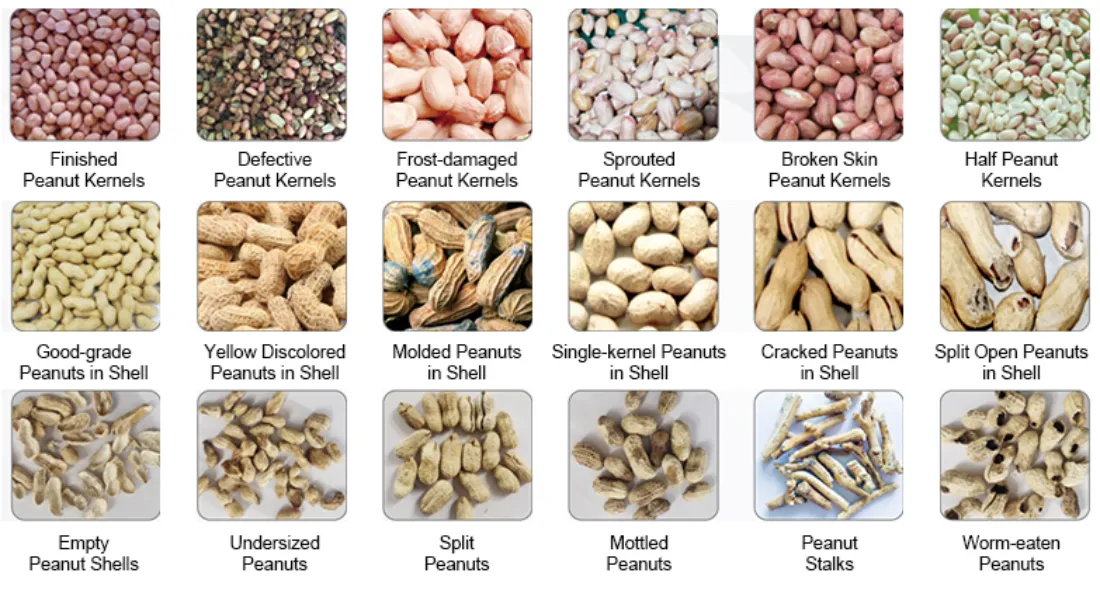
Sorting Performance for Peanut Products
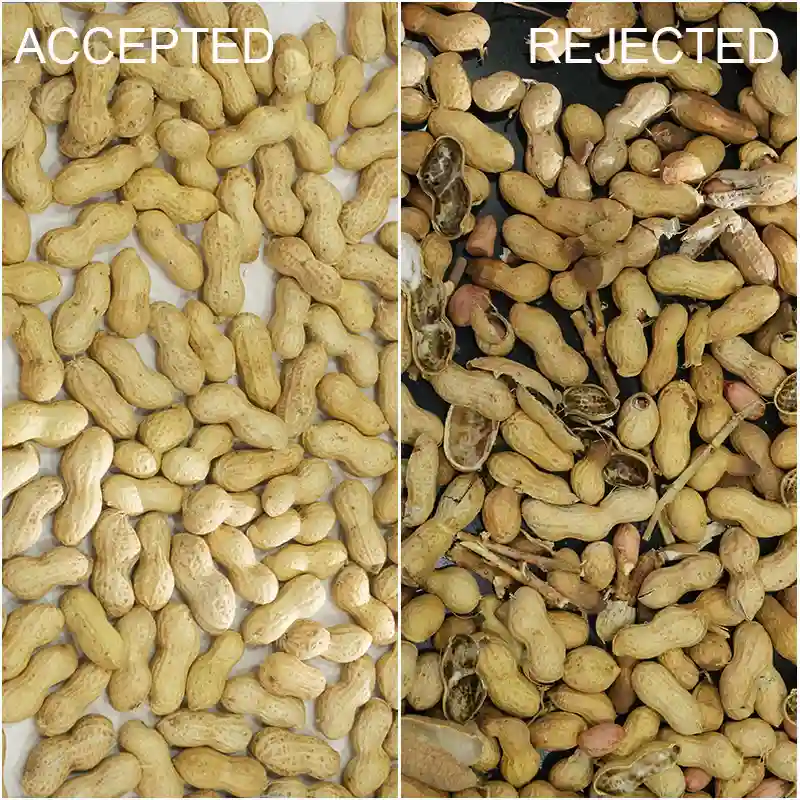
- Qualified Graded Peanut Products: LS AI supports accurate grading of shelled peanut kernels and whole in-shell peanuts. Relying on the lossless flat conveying design of the LS series belt structure, peanuts are transported without impact collision, effectively avoiding peanut skin peeling and kernel breakage during the sorting process, reducing finished product loss rate.
- Comprehensive Removal of Multiple Defects by AI Ultra-Fine Recognition: The CCD system captures apparent defects such as skin breakage, discoloration, mottling and frost damage on peanut surfaces; the infrared module penetrates peanut shells to detect internal sprouting, hollow pulp and hidden mildew. The built-in deep learning AI algorithm further identifies tiny worm traces, local mild mildew and faint kernel deterioration hidden inside peanuts, thoroughly removing all kinds of unqualified particles, peanut stalk impurities and sundries mixed in raw materials.
The self-learning AI model continuously optimizes operation parameters according to different peanut batches and raw material conditions, maintaining stable sorting precision for long-term continuous production. It fully satisfies strict quality inspection standards for food processing and peanut export trade.
Applicable Sorting Materials
Built on the universal lossless conveying hardware framework of the LS product line, LS AI upgrades the detection system with deep learning AI collaborative analysis, focusing on high-precision purification and fine grading for high-value nuts and oil crops that demand strict food safety and export inspection standards. The oil-proof belt structure adapts to high-oil nut materials, with simple daily cleaning of grease residues after production runs.
- Full-category peanut sorting (kernel & in-shell forms)
Suitable for full-process quality screening of shelled peanut kernels and whole in-shell peanuts. The AI algorithm distinguishes hard-to-filter tiny flaws including frost damage, internal sprouting, hidden mildew, worm erosion, partial kernel deterioration and uneven discoloration. It also automatically clears empty peanut shells, undersized grains, cracked shells, residual peanut stalks and miscellaneous impurities to stabilize the consistency of finished peanut quality for export food factories and peanut deep-processing enterprises. - High-end hard-shell nut refined screening
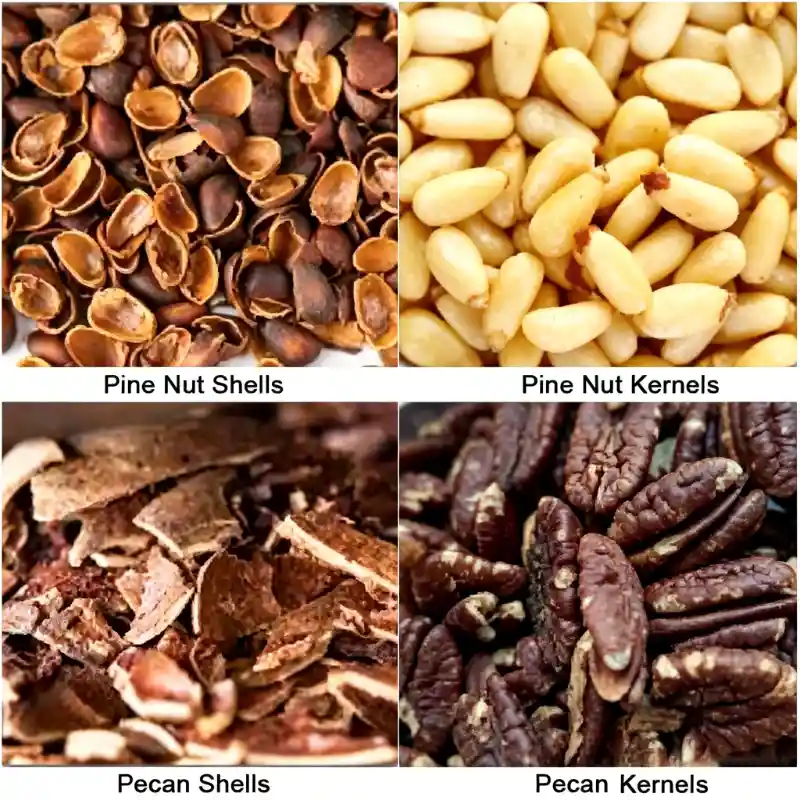
Covers walnuts, almonds, pistachios, hazelnuts, pine nuts, pecans and other commercial premium nuts. Different from hardware-driven blind-spot elimination of LS+, LS AI identifies micro invisible defects via iterative learning, realizing high-standard kernel grading, shell-kernel separation and trace bad particle removal for finished nuts used in high-end snack brands and cross-border export shipments. - High-purity sorting of oil seeds
Matches purification demands for camellia seeds and other oil-bearing raw materials, removing deteriorated particles, seed husks and foreign contaminants hidden in raw materials, raising the purity of raw oil input materials for edible oil production lines.
FAQS
-
What subtle nut defects can the AI system identify that standalone infrared hardware fails to capture?
The AI algorithm accurately recognizes micro worm traces, localized mild kernel mildew and faint oxidative discoloration. These inconspicuous flaws easily evade conventional infrared detection, and the elimination effect fully satisfies strict quality control benchmarks for export-grade nut commodities.
-
Is the LS AI capable of adaptive parameter adjustment when nut maturity differs across different raw material batches?
The system is preloaded with abundant built-in material feature databases for various nuts. It autonomously switches matching recognition logic and operating parameters in real time according to the actual quality fluctuation of incoming raw nuts without frequent manual calibration.
-
Can LS AI effectively reduce the risk of customer complaints and product returns caused by mixed defective nuts in finished batches?
Combined inspection of surface CCD imaging and AI-assisted internal infrared scanning achieves full-dimensional quality monitoring. The finished nut batches maintain an extremely low rate of residual hidden defective kernels, significantly cutting after-sales return risks for nut manufacturers.
-
Does the AI human-machine control panel support docking with the original PLC control system of existing nut processing production lines?
Standard industrial communication interfaces are reserved on the equipment. Seamless connection with the factory’s central control platform is achievable to realize automatic collection, recording and tracing of whole-process production operation data.
We strictly control the production quality of each product and meticulously process every item.
Related Products
-
APEX Belt Low-Breakage Grain Sorter for Fragile Coarse Cereals
-
APEX Belt-Type Color Sorter for Grain Beans Pulses Raisin Pea Corn
-
APEX Walnut Sorting Machine for Pistachio Macadamia Pecan Almond
-
APEX AI Food-Grade Double Belt Optical Sorter for Pepper Chilli
-
APEX High-Speed Conveyor Belt Sorter For Hazelnut Peanut Seed
-
APEX Double-Layer Belt Sorter for Crop Wheat Impurity Removal
-
APEX Food Conveyor Belt Sorting Machine for Corn Maize Soybean
-
APEX Dehydrated Vegetable Fruit Sorter With AI Belt Sorting System