








How Does Quartz Sand Sorting Improve Mineral Purity and Processing Efficiency?
Release time: 2026-09-24
Table of Contents
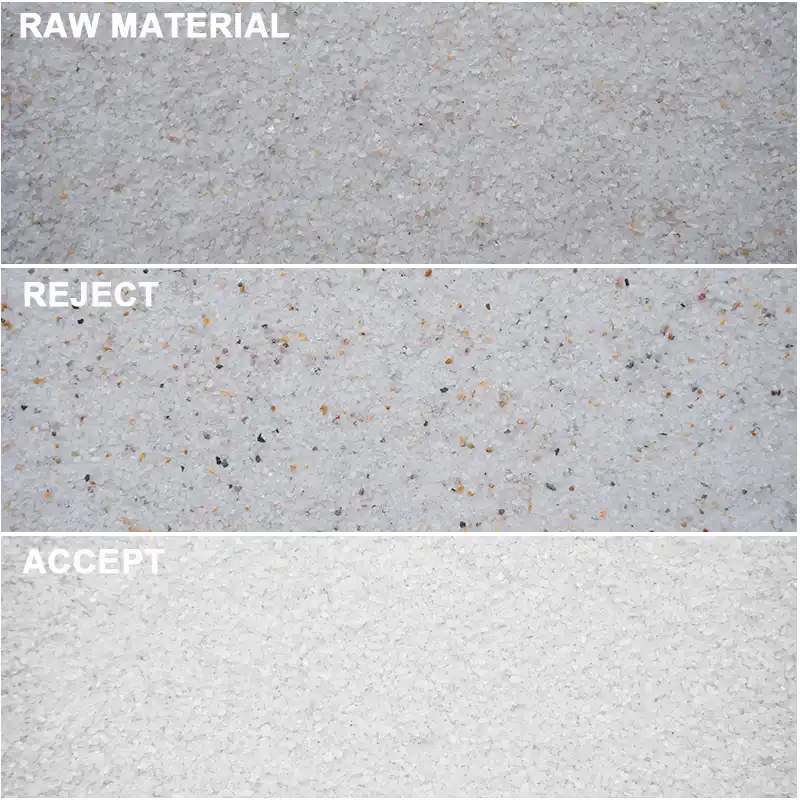
Quartz sand is widely used in glass manufacturing, foundry applications, ceramics, construction materials, engineered stone and other industrial processes. However, naturally occurring quartz sand rarely has perfectly consistent quality. Differences in color, surface appearance, mineral composition and unwanted inclusions can affect the final purity of the material.
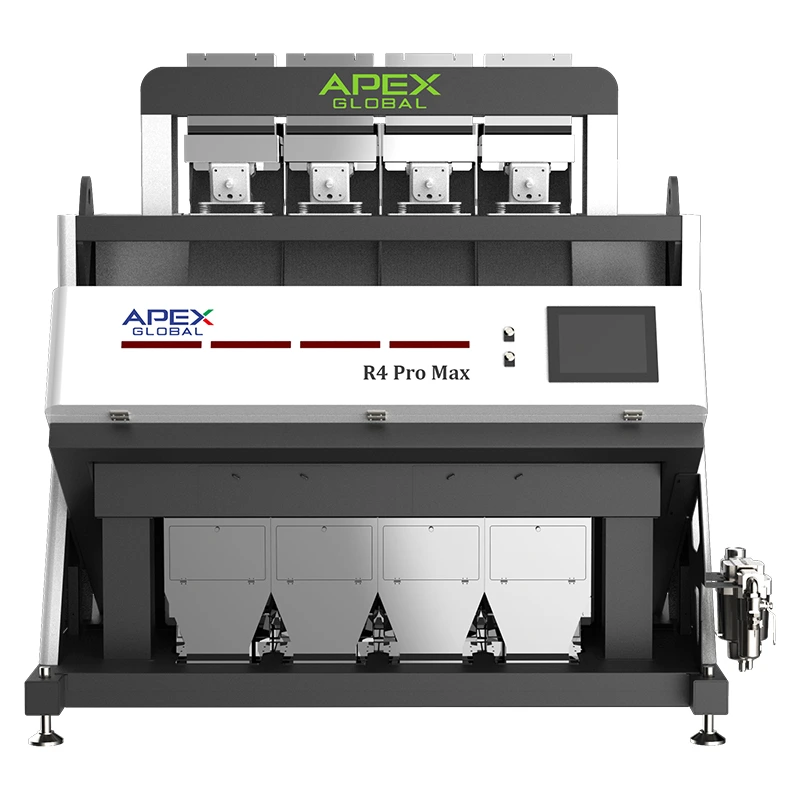
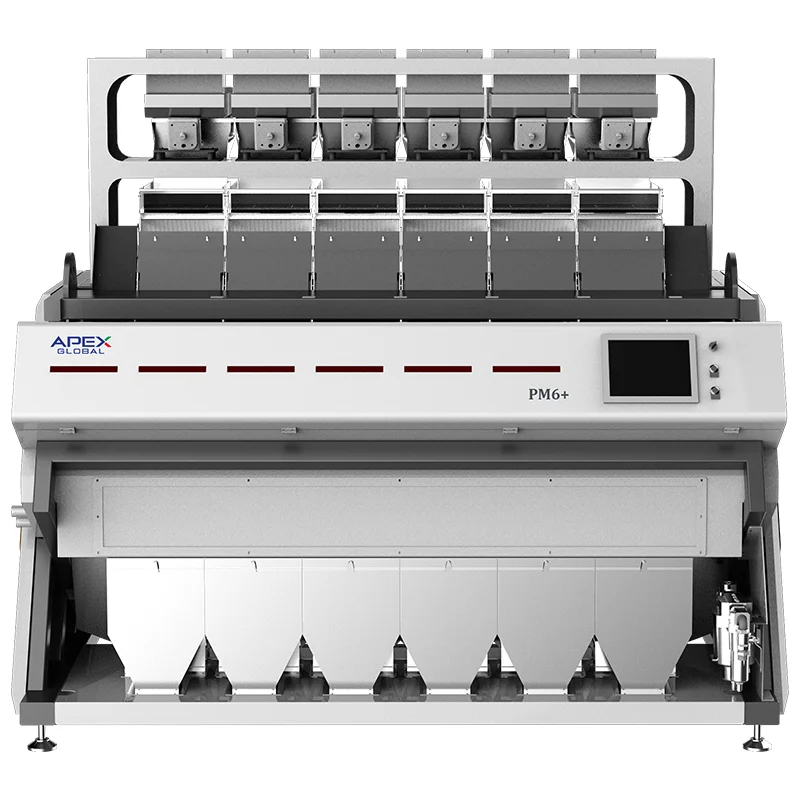
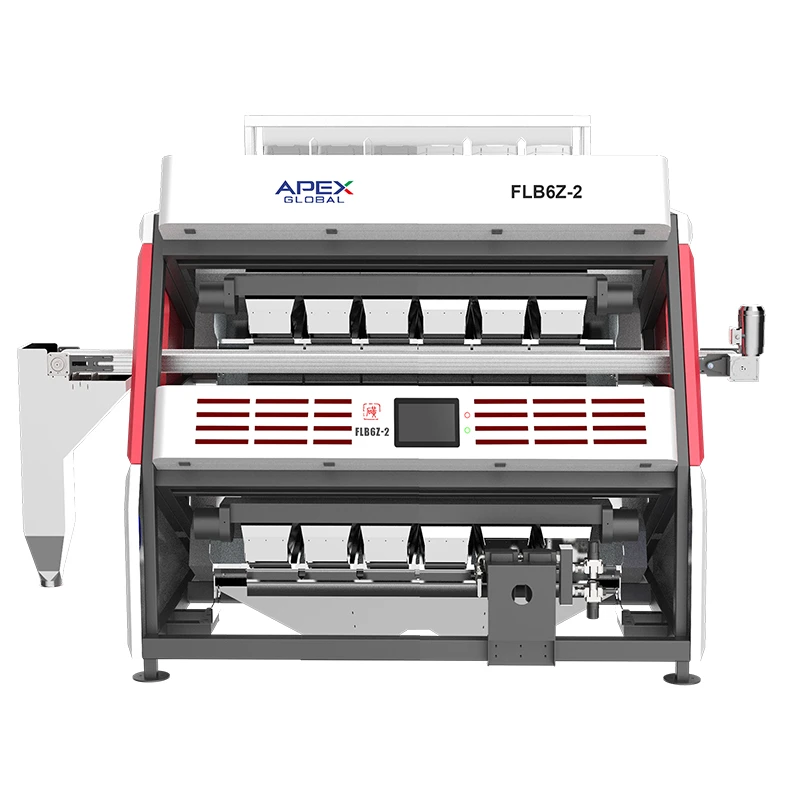
A Quartz Sand Sorting Machine provides a way to remove visually distinguishable impurities before or alongside conventional mineral processing. By using optical detection and automated separation, processors can improve feed quality while reducing the amount of unwanted material entering downstream equipment.
Why Is Quartz Sand Purity Important?
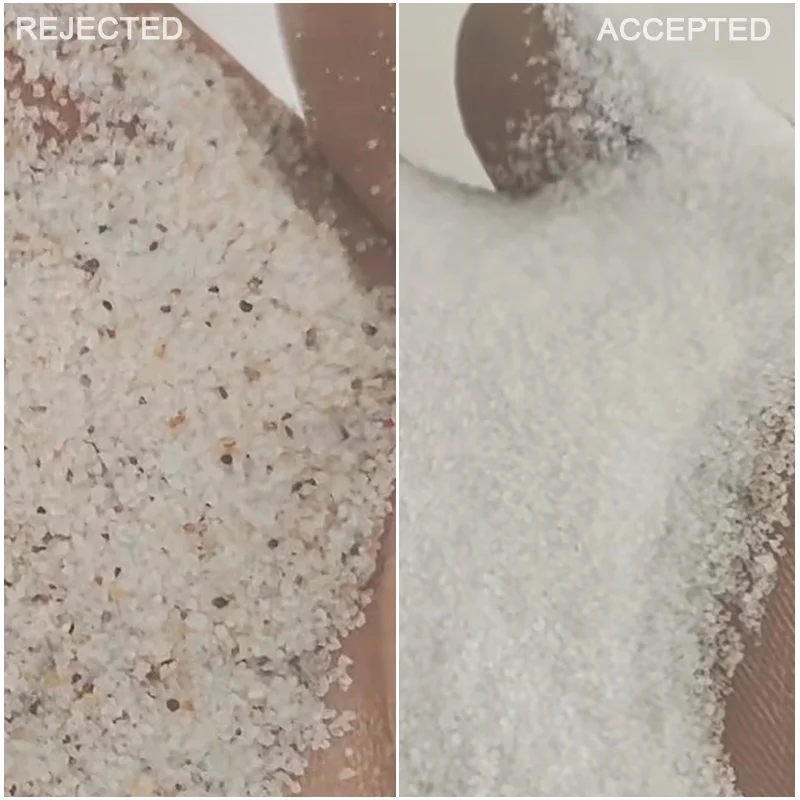
Quartz sand quality is strongly related to the requirements of its end application. Standard construction or industrial applications may tolerate certain impurities, while glass, foundry and other higher-value applications often require tighter control over material consistency.
Common unwanted materials in quartz sand may include:
- Discolored quartz particles
- Clay or other surface contaminants
- Iron-bearing minerals
- Dark mineral particles
- Weathered or altered material
- Other visually different mineral inclusions
Even when impurities represent a relatively small portion of the feed, they can create problems during later processing. For example, iron-bearing contamination may influence the color and optical properties of glass products, while inconsistent feed quality can increase the workload of downstream treatment systems.
This is why sorting is often considered as part of the front-end quality-control strategy rather than simply an additional separation step.
How Does a Quartz Sand Sorting Machine Work?
A modern quartz sand sorting machine uses optical detection to identify differences between target quartz particles and unwanted materials.
The exact configuration depends on particle size, feed characteristics and the required purity level, but the basic operating principle involves several stages.
1. Material Preparation
Quartz sand must first be presented to the sorting system in a relatively controlled and consistent manner. Feeding conditions influence how clearly the optical system can observe individual particles.
Screening, sizing and appropriate material distribution can therefore have a significant effect on sorting performance.
2. Optical Detection
As quartz particles pass through the detection area, cameras or optical sensors capture information about their appearance.
Depending on the machine configuration, the system may evaluate characteristics such as:
- Color
- Brightness
- Surface appearance
- Shape or visual characteristics
- Contrast between quartz and impurities
CCD-based optical technology is particularly useful when the target impurity has a visible difference from the quartz material.
3. Intelligent Classification
The sorting system processes the detected information and determines whether each particle matches the defined acceptance criteria.
Instead of relying on manual inspection, the machine applies the programmed sorting parameters continuously across the material stream.
4. Automatic Separation
Once an unwanted particle is identified, the system activates the corresponding ejection mechanism to remove it from the acceptable quartz stream.
The result is a cleaner product stream without requiring workers to manually inspect individual particles.
What Types of Impurities Can Optical Sorting Remove?
Optical sorting is most effective when the target impurities have detectable differences from the quartz sand.
For example, dark or strongly discolored particles can often be distinguished from relatively uniform quartz material. This makes optical sorting useful for removing certain visually identifiable mineral contaminants before more intensive processing.
However, optical sorting does not replace every mineral beneficiation technology.
If two materials have very similar visual characteristics, their separation may require other technologies or additional processing stages. This is an important consideration when evaluating a silica sand sorting machine because the feed material, impurity characteristics and target purity determine whether optical sorting is appropriate.
How Does Quartz Sand Sorting Improve Processing Efficiency?
The main advantage of sorting at an earlier stage is that it can improve the quality of the material entering downstream processes.
Higher Feed Purity
Removing visually identifiable impurities from the feed can increase the proportion of acceptable quartz material entering subsequent processing.
For applications with strict raw-material specifications, this can help create a more consistent feedstock.
Reduced Downstream Processing Load
If unwanted particles are removed before additional treatment, downstream equipment does not need to process as much contaminated material.
This can be particularly useful when the later processing stages are more energy-intensive or expensive.
More Consistent Product Quality
Quartz deposits can vary considerably from one source or production batch to another. Automated sorting provides a repeatable method for controlling visible quality differences and maintaining more consistent product streams.
Better Use of Valuable Material
When the raw material contains a mixture of acceptable quartz and unwanted particles, selective sorting can help recover usable material instead of treating the entire feed as low-quality material.
Optical Sorting vs. Conventional Quartz Sand Processing
Optical sorting should not be viewed as a universal replacement for washing, screening, magnetic separation or other mineral-processing methods.
Each technology addresses different separation characteristics.
| Processing Method | Main Separation Principle | Typical Role |
|---|---|---|
| Screening | Particle size | Size classification |
| Washing | Surface contamination / fines | Cleaning and desliming |
| Magnetic separation | Magnetic properties | Removing magnetic minerals |
| Optical sorting | Visible material differences | Removing visually distinguishable impurities |
| Chemical processing | Chemical properties | High-level purification |
In many applications, optical sorting can serve as a complementary stage rather than an isolated solution.
For example, a processor may use screening to control particle size and then apply optical sorting to remove visually different impurities before subsequent beneficiation.
What Should Buyers Consider Before Choosing a Quartz Sand Sorter?
A machine that works well for one quartz deposit may not produce the same results with another. Material testing is therefore critical.
Key considerations include:
- Particle size: The feed size must match the machine’s sorting capability.
- Impurity type: Optical sorting depends on detectable differences between target and reject materials.
- Feed presentation: Particle overlap can reduce detection accuracy.
- Required purity: Higher purity targets may require multiple sorting stages.
- Throughput: The machine should match the site’s required processing capacity.
- Material characteristics: Color, moisture, surface condition and particle shape can influence detection.
- Downstream process: Sorting should be evaluated as part of the complete processing line.
For suppliers and processors handling quartz sand, application testing with actual samples is one of the most practical ways to determine whether optical sorting can deliver the required separation performance.
APEX Quartz Sand Sorting Demo: 26–120 Mesh High-Purity Mineral Separation
Watch this on-site demo video of APEX mineral color sorter for quartz sand sorting and grading.
The machine accurately separates qualified quartz sand and waste impurities across three particle size ranges:
26–40 Mesh Qualified Quartz Sand
40–70 Mesh Qualified Quartz Sand
70–120 Mesh Qualified Quartz Sand
Our AI mineral sorting equipment precisely removes heterochromatic particles and defective grains, improving quartz sand whiteness, purity and commercial value.
It delivers stable grading accuracy for different mesh sizes, cuts manual sorting work, and supplies high-standard raw materials for glass, ceramics and fine industrial sand production.
Contact us for a material test and customized purification solution for your quartz processing project.
Where Does a Quartz Sand Sorting Machine Fit in a Processing Line?
A Quartz Sand Sorting Machine is particularly valuable when the raw material contains visually identifiable impurities that can be removed before further processing.
Rather than attempting to perform every purification task with one machine, processors can use optical sorting as a targeted separation step within a broader mineral-processing system.
This approach can help improve feed quality while allowing downstream equipment to focus on the separation tasks it is specifically designed to perform.
Conclusion
Quartz sand sorting can improve both mineral purity and processing efficiency when the unwanted materials have detectable optical differences from the target quartz.
By combining controlled material feeding, optical detection and automated rejection, a Quartz Sand Sorting Machine can remove selected impurities and improve the consistency of the feed entering downstream processing.
For quartz and silica sand producers, the key is not simply choosing a machine with high throughput. The more important question is whether the sorting technology can accurately identify the specific impurities present in the actual material.
Frequently Asked Questions
1. What is a Quartz Sand Sorting Machine?
A Quartz Sand Sorting Machine is an optical sorting system designed to identify and separate quartz particles from visually distinguishable impurities in quartz or silica sand.
2. Can optical sorting remove iron impurities from quartz sand?
It can remove iron-bearing or other impurity particles when they have sufficient visual differences from the target quartz. The actual performance depends on the characteristics of the feed material.
3. Is optical sorting suitable for high-purity quartz sand?
It can be used as part of a high-purity quartz processing system when the impurities are optically distinguishable. Additional beneficiation technologies may still be required for impurities that cannot be identified visually.
4. What particle size can a quartz sand sorter process?
The suitable particle-size range depends on the specific machine configuration and material characteristics. Sample testing is recommended before selecting equipment.
5. Can quartz sand sorting replace magnetic separation?
Not necessarily. Optical sorting and magnetic separation rely on different separation principles and may be used together when the processing objective requires both types of separation.
Improve Quartz Sand Processing with APEX Sorting
APEX Sorting provides optical sorting solutions for mineral and quartz sand applications, using CCD-based detection and intelligent separation technologies to help processors remove visually distinguishable impurities and improve material quality.
For quartz sand producers looking to optimize front-end material separation, Quartz Sand Sorting Machine technology can provide a targeted approach to improving feed consistency and processing efficiency.