








How Does AI Optical Sorting Improve Plastic Recycling?
Release time: 2026-08-14
Table of Contents
Plastic recycling is not simply a matter of separating plastic from other waste. The real challenge is identifying target materials accurately within a fast-moving, contaminated and constantly changing waste stream.
As recycling facilities move toward greater automation, AI Optical Sorting is becoming an important part of modern plastic recovery systems. By combining machine vision, optical detection and intelligent classification, automated sorting systems can recognize visual characteristics and make real-time separation decisions at production speed.
What Is AI Optical Sorting?
AI Optical Sorting combines optical detection, machine vision and artificial intelligence to automate material identification and separation.
Traditional color sorting mainly asks a simple question: “What color is this material?” An AI-assisted optical system can evaluate a broader set of visual characteristics, including:
- Color
- Shape
- Size
- Surface appearance
- Transparency
- Visible contaminants
- Labels and packaging features
In a typical recycling line, plastic moves across a conveyor through a detection zone. Industrial cameras capture images continuously, software analyzes the incoming data, and the system determines whether each target should remain in the product stream or be rejected.
The process is therefore more than replacing manual workers with cameras. It creates an automated chain of:
Detection → Classification → Decision → Ejection
Why Is Traditional Plastic Sorting Becoming More Challenging?
Plastic recycling streams are rarely as clean or consistent as laboratory samples.
The same polymer can appear in multiple colors, while different polymers may have very similar visual characteristics. Transparent, white or lightly colored plastics can be particularly difficult to distinguish using color alone.
Real-world recycling streams may also contain:
- Different colored plastic bottles
- Labels and packaging films
- Surface contamination
- Deformed or damaged plastics
- Mixed particle sizes
- Multiple polymer types
These conditions make purely manual or basic color-based sorting difficult to scale while maintaining consistent purity and recovery.
Modern optical sorting systems address part of this challenge through high-resolution imaging and automated classification. However, performance still depends heavily on material presentation, overlap, contamination, conveyor conditions and equipment maintenance.
How Does AI Improve Plastic Identification?
The main value of AI is not replacing optical sensors. It is helping the system interpret the information those sensors collect.
A conventional vision system may identify the color of a plastic item. An AI model can combine color, shape and surface characteristics to classify the object more intelligently.
| Detection Factor | Conventional Vision | AI-Assisted Optical Sorting |
|---|---|---|
| Color recognition | ✓ | ✓ |
| Shape recognition | Basic | ✓ |
| Complex visual features | Limited | ✓ |
| Multi-feature classification | Limited | ✓ |
| Complex contamination recognition | Limited | Improved |
| Automated classification | ✓ | ✓ |
| Algorithm-based optimization | Limited | ✓ |
This is why modern recycling equipment increasingly refers to AI Sorting Technology, machine vision and intelligent classification rather than simple color detection.
How Does AI Optical Sorting Work in a Recycling Line?
A typical automated sorting process can be divided into four stages.
1. Material Feeding
Plastic enters the conveyor system and should ideally be presented in a relatively stable and separated flow.
The less the materials overlap, the more visible surface area the detection system can evaluate.
2. Optical Detection
Industrial cameras and optical sensors scan materials as they pass through the detection zone.
For characteristics such as color, transparency and visible surface defects, visible-light optical sorting provides direct information.
3. AI Classification
The software analyzes the captured information and classifies each item according to predefined sorting objectives, such as:
- Accept
- Reject
- Target material
- Contaminant
AI is particularly valuable for interpreting complex visual information and making consistent classification decisions.
4. Automatic Ejection
Once a target is identified, the sorting system directs it to the appropriate output stream, typically through a high-speed ejection mechanism.
For industrial performance, the entire chain must remain synchronized:
Detection + Classification + Ejection
What Problems Can AI Optical Sorting Solve?
For plastic recyclers, the value of sorting technology ultimately comes down to measurable production results.
More Consistent Product Purity
Contamination in a recovered plastic stream can reduce the quality and value of recycled material.
Automated optical sorting applies consistent classification rules throughout production, reducing the variation associated with repetitive manual inspection.
Reduced Dependence on Manual Sorting
High-volume recycling facilities may process large quantities of material continuously.
Manual sorting is physically repetitive and can become less consistent as operators work for extended periods. Automation can take over many repetitive detection and rejection tasks.
Greater Process Consistency
Automated optical systems do not experience human fatigue in the same way as manual sorting teams.
For facilities operating long production shifts, consistent detection and ejection can be an important operational advantage.
Better Handling of Complex Visual Streams
AI can evaluate multiple visual characteristics instead of relying on a single attribute such as color.
This makes intelligent optical sorting particularly useful where material appearance, shape and surface condition vary significantly.
How Does AI Optical Sorting Differ From NIR Sorting?
The two technologies are often discussed together, but they solve different identification problems.
Optical Sorting generally relies on visible characteristics such as color, appearance and shape.
NIR Sorting, by contrast, identifies materials through their near-infrared spectral response and is particularly useful for distinguishing different polymer types.
| Technology | Primary Detection Basis | Typical Application |
|---|---|---|
| Visible Optical Sorting | Color, shape, appearance | Color separation and visible contaminant removal |
| AI Vision Sorting | Multiple visual characteristics | Complex object recognition |
| NIR Sorting | Polymer spectral signatures | PET, PP, PE and other polymer identification |
| Combined Sorting | Multiple sensor inputs | High-purity multi-stage sorting |
Therefore, AI Optical Sorting and NIR are not necessarily competing technologies.
In sophisticated recycling plants, different sensing technologies can be combined to address different stages of material identification. Commercial optical sorting systems already combine NIR and color sensors with automated classification and ejection.
What Should You Evaluate Before Buying an AI Plastic Sorter?
When selecting an AI Plastic Sorting Machine, buyers should evaluate the entire sorting application rather than focusing only on the AI algorithm.
Key considerations include:
- Feed Material: What plastic stream will be processed?
- Particle Size: What is the expected size range?
- Throughput: How many tons per hour must the system handle?
- Target Purity: What purity level is required for the final product?
- Detection Technology: Is visible light, NIR or a combination required?
- Ejection System: How will detected materials be separated?
- Maintenance: How easy are sensor cleaning and calibration?
- Application Testing: Can the supplier test representative samples?
One important point is often overlooked: AI cannot compensate for poor material presentation. Heavy overlap, unstable conveying or dirty sensors can reduce sorting performance regardless of how sophisticated the algorithm is. Real-world AI sorting performance depends on stable material presentation, suitable detection conditions and proper maintenance.
Why Consider APEX Sorting for Plastic Recycling?
For a recycling company, the objective should not be to purchase an “AI machine” simply because AI is a popular technology term. The more important question is whether the sorting system matches the actual material stream, production conditions and purity target.
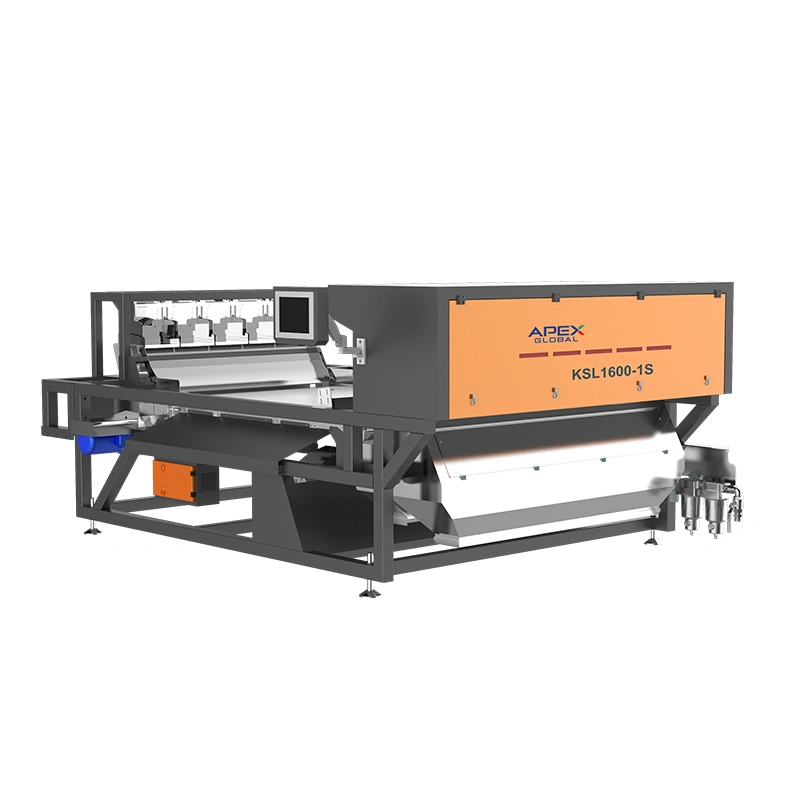
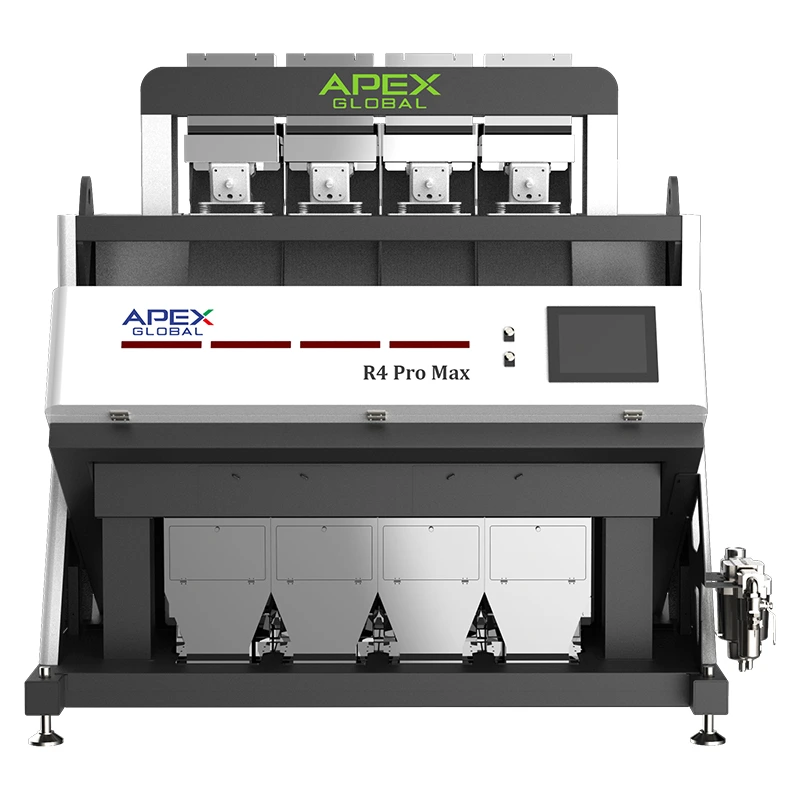
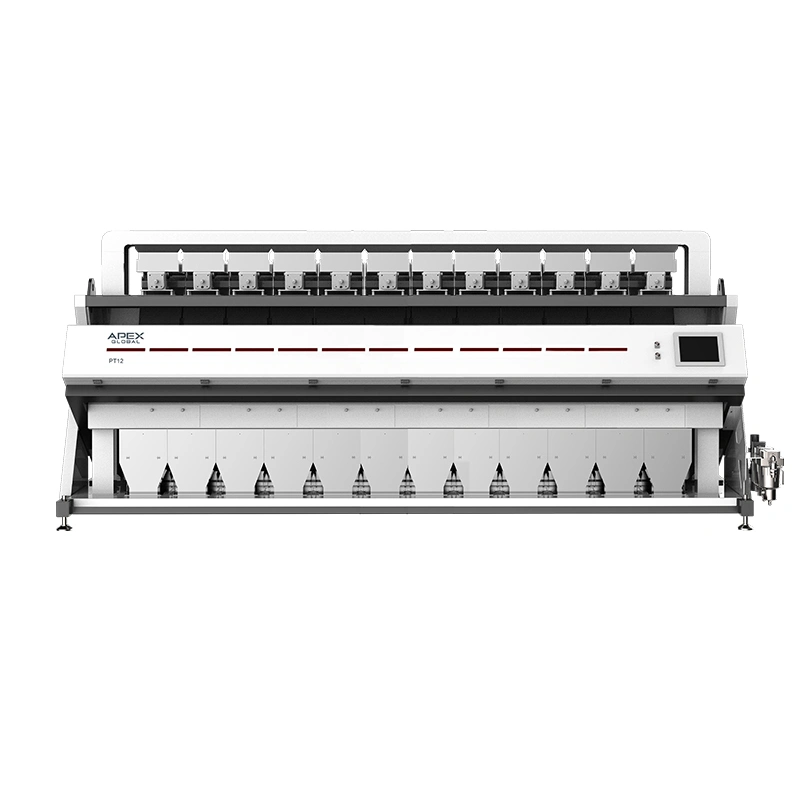
APEX Sorting develops intelligent optical sorting solutions for recycling applications, including plastic color sorting and NIR-based plastic sorting technologies.
For applications where color separation, automated contaminant removal or improved recycled-plastic purity is the priority, explore the APEX Sorting Plastic Color Sorter and evaluate the appropriate technology according to your material characteristics and production requirements.
Video of Plastic Waste Recycling Line
Watch this real production line demo of APEX AI optical sorting for plastic recycling.
Mixed plastic waste contains hidden contaminants that reduce the value of recycled materials. APEX AI-powered sorting system identifies impurities, separates mixed plastics and turns waste plastic into clean, reusable raw materials.
This AI sorting solution helps recycling plants boost final plastic purity, cut manual sorting labor and maximize the value of waste plastic streams.
Contact us to test your plastic waste samples and get a customized sorting solution for your recycling plant.
FAQ
What is AI Optical Sorting?
AI Optical Sorting is an automated sorting technology that combines optical sensors, machine vision and AI-based classification to identify and separate materials according to detectable characteristics.
Can AI Optical Sorting identify different types of plastic?
AI vision can classify plastics according to visual characteristics such as color, shape and appearance. For polymer-level identification, NIR technology is generally more appropriate.
Is AI Optical Sorting better than manual plastic sorting?
For high-volume industrial applications, automated sorting can provide more consistent processing and reduce reliance on repetitive manual sorting. Actual performance depends on material composition, presentation and system configuration.
What is the difference between AI sorting and NIR sorting?
AI generally describes the recognition and classification capability, while NIR identifies materials through near-infrared spectral signatures. The two technologies can work together.
What should be tested before purchasing an AI plastic sorter?
Representative production samples should be tested for purity, recovery, throughput, material loss and stability under realistic operating conditions.