






How Does an Ore Color Sorter Improve Mineral Processing?
Release time: 2026-09-18
Table of Contents
Mineral processing does not always have to begin by sending the entire crushed ore stream into intensive downstream treatment. For some ores, removing obvious waste rock before grinding and beneficiation can reduce the amount of low-value material that needs to be processed.
This is one of the key applications of an Ore Color Sorter. By using machine vision, color recognition and automated separation, optical sorting can pre-sort suitable ores before conventional processing, potentially reducing unnecessary feed volume and improving the quality of material entering downstream stages.
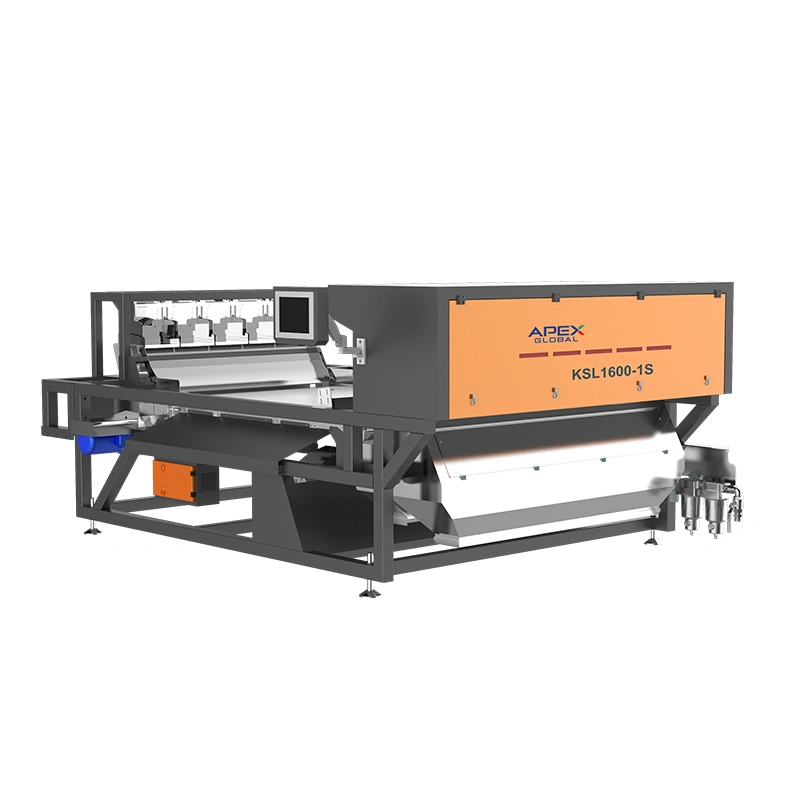
What Is an Ore Color Sorter?
An Ore Color Sorter is an optical sorting machine that identifies mineral particles according to detectable characteristics such as color, brightness, surface appearance and other visual differences.
Unlike manual picking or relying entirely on downstream beneficiation, optical ore sorting can perform an early separation step before the material enters more intensive processing.
The basic process is:
Crushing → Feeding → Optical Detection → Classification → Ejection
When valuable mineral-bearing particles and waste rock have sufficiently different optical characteristics, the system can separate them automatically.
Why Is Ore Pre-Sorting Important?
A fundamental question in mineral processing is:
Why process low-value waste rock through expensive downstream equipment if it does not contribute to the final product?
If a significant proportion of run-of-mine material consists of waste rock, crushing, grinding, conveying and processing that material creates additional operating demand.
Pre-sorting follows a simple principle:
Remove waste before expensive processing.
By rejecting part of the low-value feed early, a plant may reduce the total material entering downstream stages.
This does not mean an Ore Color Sorter replaces conventional beneficiation. Instead, it can reduce the burden placed on later processing stages.
How Does an Ore Color Sorter Work?
1. Ore Feeding
Crushed and screened material enters the sorting conveyor.
Particle-size control is important because oversized particles may be difficult to detect and eject consistently, while very fine particles can provide limited optical detection and ejection performance.
2. Optical Detection
As particles pass through the detection zone, industrial cameras and optical systems capture information about their surfaces.
The system may analyze:
- Color
- Brightness
- Surface texture
- Shape
- Visible mineral characteristics
The stronger the detectable visual difference between ore and waste, the more suitable the application may be for optical pre-sorting.
3. Intelligent Classification
Software analyzes the detected information and determines whether each particle belongs to the target ore stream or waste stream.
For example:
Target: Valuable mineral-bearing particles
Reject: Waste rock
The classification strategy should be developed according to the specific ore type, mineral composition and actual samples.
4. Automatic Ejection
After classification, a high-speed ejection mechanism separates the selected particles.
The final result is typically:
Accepted Ore + Rejected Waste
This reduces the amount of unwanted material entering subsequent crushing, grinding or beneficiation stages.
Which Minerals Can Benefit From Optical Sorting?
An Ore Color Sorter is not suitable for every mineral deposit.
It is particularly useful when the valuable material and waste rock have detectable visual differences.
Potential applications include:
| Material / Application | Potential Sorting Objective |
|---|---|
| Quartz | Remove visible impurities |
| Silica sand | Improve feed material quality |
| Colored ores | Separate ore from waste rock |
| Industrial minerals | Remove unwanted particles |
| Mixed mineral feed | Pre-concentration |
| Waste rock | Reject low-value material |
The mineral name alone, however, does not determine whether optical sorting will work.
The more important question is:
Can the target mineral and unwanted material be reliably distinguished using the available optical signals?
How Does Ore Pre-Sorting Improve Mineral Processing?
Lower Feed Volume
If a portion of waste rock can be rejected before downstream processing, the total feed volume can decrease.
This may reduce the demand placed on:
- Crushing
- Grinding
- Conveying
- Water-intensive downstream processes
- Beneficiation equipment
The actual reduction depends on the composition of the feed and the achievable sorting performance.
Higher Feed Grade
When low-value waste is removed, the remaining material may contain a higher proportion of valuable minerals.
The basic logic is:
Reject Waste → Concentrate Value → Reduce Downstream Load
Better Use of Downstream Equipment
Grinding and subsequent beneficiation can be among the more energy-intensive stages of mineral processing.
If obvious waste has already been removed, downstream equipment can spend more of its capacity processing potentially valuable material.
Greater Process Flexibility
Pre-sorting can also provide greater flexibility when ore sources, grades and production requirements change.
Ore Color Sorting vs. Conventional Mineral Processing
An Ore Color Sorter should not be viewed as a replacement for conventional mineral processing.
The two technologies generally perform different functions.
| Stage | Main Purpose |
|---|---|
| Crushing | Reduce particle size |
| Screening | Control particle size |
| Optical Pre-Sorting | Remove detectable waste |
| Grinding | Liberate minerals |
| Conventional Beneficiation | Further mineral concentration |
| Final Processing | Produce required concentrate |
Optical sorting is primarily valuable for early waste rejection.
Conventional beneficiation remains responsible for further concentration after mineral liberation and separation.
For suitable ores, optical sorting can therefore complement a conventional mineral processing circuit rather than replace it.
What Factors Affect Ore Color Sorting Performance?
Color Contrast
The stronger the color difference between valuable mineral and waste rock, the easier it is for a visible optical system to distinguish them.
If both materials look very similar, visible color alone may not provide enough information.
Particle Size
Particle size affects:
- Detection area
- Conveyor presentation
- Ejection accuracy
The sorting system therefore needs to operate within an appropriate particle-size range.
Particle Overlap
When particles overlap heavily, the system may not be able to evaluate the complete visible surface of each particle.
Stable and well-distributed material presentation is therefore important.
Surface Condition
Dust, mud, moisture and other surface coverage can change the visible appearance of ore.
This is another reason why representative sample testing is important before selecting equipment.
Dry Ore Sorting vs. Wet Mineral Processing
One important advantage of optical pre-sorting is that it can operate as a dry separation stage before some wet-processing operations.
Conventional wet processing may involve:
- Water
- Slurry preparation
- Pumps
- Thickening
- Dewatering
Dry optical pre-sorting can reject part of the waste before the material enters these stages.
| Factor | Optical Pre-Sorting | Wet Processing |
|---|---|---|
| Main medium | Dry material | Water/slurry |
| Early waste rejection | Strong potential | Usually later |
| Water requirement | Low/none at sorting stage | Required |
| Main identification | Optical characteristics | Physical/chemical properties |
| Typical role | Pre-concentration | Mineral beneficiation |
However, dry optical sorting cannot replace processes that require mineral liberation or deeper concentration.
Its strongest role is generally early-stage pre-sorting and waste rejection.
What Should Buyers Test Before Choosing an Ore Sorter?
Mining companies should ideally test representative ore samples before purchasing an Ore Color Sorter.
Important parameters include:
- Ore type and mineral composition
- Feed particle size
- Target mineral percentage
- Waste rock percentage
- Color and surface contrast
- Required throughput
- Recovery rate
- Reject rate
- Feed-grade improvement
- Downstream processing requirements
Two metrics deserve particular attention:
Recovery and rejection efficiency.
If improving waste rejection causes excessive loss of valuable mineral, the sorting system may not deliver the expected economic benefit.
Sample testing should therefore evaluate both target-material recovery and waste rejection.
Why Choose APEX Sorting for Ore Color Sorting?
The real value of optical ore sorting is not simply separating rocks by color. It is using optical detection at the right point in the process to support pre-sorting, waste rejection and feed-grade improvement.
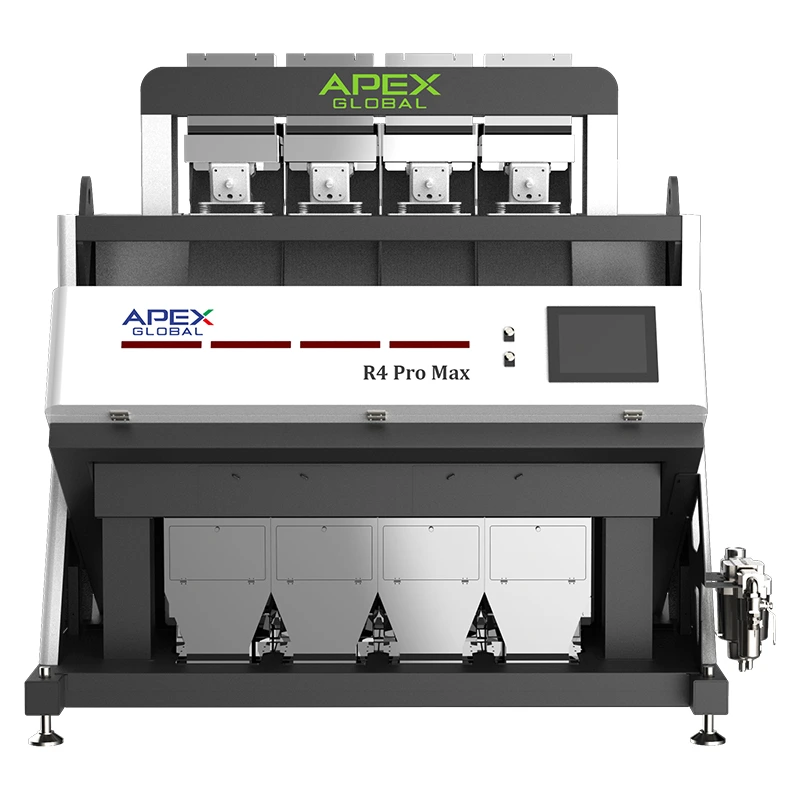
APEX Sorting provides intelligent optical sorting equipment for mineral-processing applications, including Ore Color Sorting and Quartz Sand Sorting.
If your ore contains sufficiently clear color or surface differences and you want to reduce waste entering crushing, grinding or downstream beneficiation, explore the APEX Sorting Ore Color Sorter and evaluate sorting performance, recovery, reject efficiency and throughput using representative ore samples.
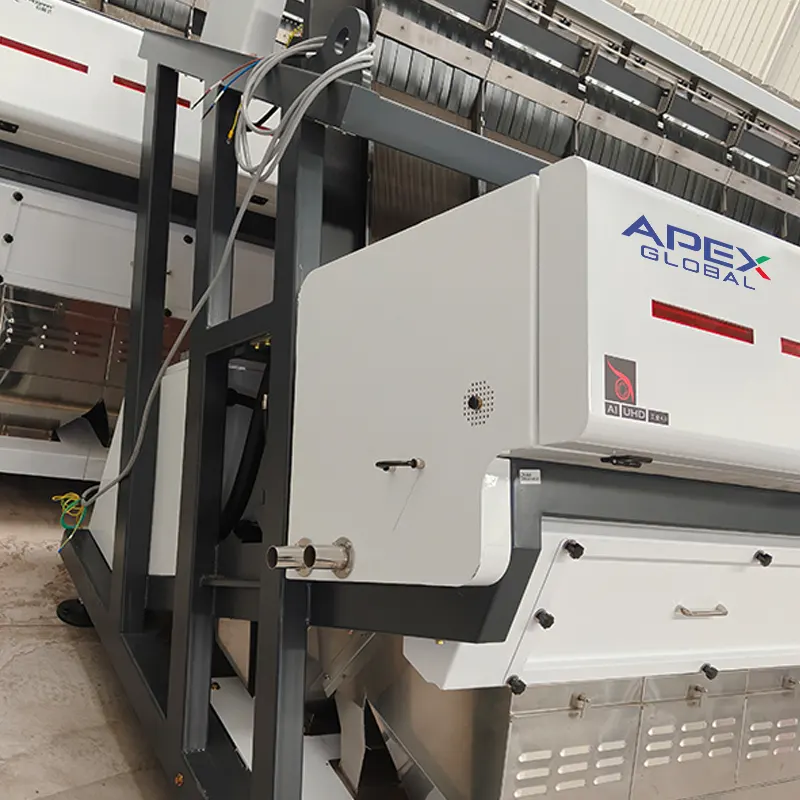
On-site Belt-type Ore Color Sorter Sorting Demo Video
Watch this demo video of the APEX belt-type ore color sorter for pebble purification and impurity removal.
The ultra HD recognition system identifies tiny color differences, heterochromatic particles and mixed impurities that manual sorting cannot detect.
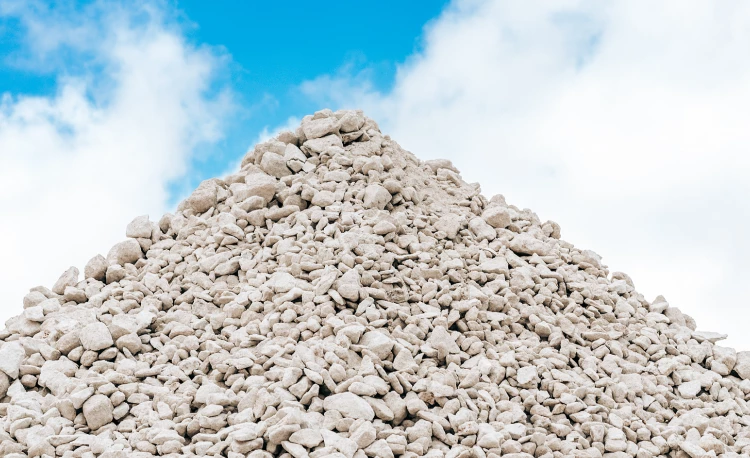
Beyond pebble purification, this intelligent ore sorting solution supports a wide range of mineral materials including quartz stone, potassium feldspar, polysilicon, calcium carbonate and barite.
It replaces inefficient manual sorting, stabilizes product quality, improves yield and cuts labor costs for mineral processing lines.
Contact us for customized mineral sorting solutions and factory trial tests with your raw ore samples.
FAQ
What is an Ore Color Sorter?
An Ore Color Sorter is an optical sorting machine that identifies mineral particles according to visible characteristics such as color, brightness and surface appearance.
What is the main purpose of ore pre-sorting?
The main purpose is to remove detectable waste or low-value material before it enters more energy-intensive downstream processing.
Can an Ore Color Sorter replace conventional mineral processing?
Usually not. Optical sorting is generally used as a pre-sorting or pre-concentration stage, while conventional beneficiation performs further mineral liberation and concentration.
What minerals can be sorted by an Ore Color Sorter?
It is most suitable for materials where valuable minerals and unwanted rock have detectable differences in color or surface characteristics. Quartz and other industrial minerals can be potential applications, but actual suitability should be confirmed through sample testing.
Does optical ore sorting require water?
Optical pre-sorting can operate as a dry sorting process, so water does not need to be introduced at the optical sorting stage.
What determines ore sorting accuracy?
Color contrast, particle size, particle overlap, surface condition, sensor configuration and conveyor presentation can all influence sorting performance.
Should an ore sorter be tested with actual mine material?
Yes. Representative ore samples should be tested to evaluate recovery, reject efficiency, throughput and feed-grade improvement before equipment selection.