





How Does NIR Plastic Sorting Identify Different Polymers?
Release time: 2026-08-21
Table of Contents
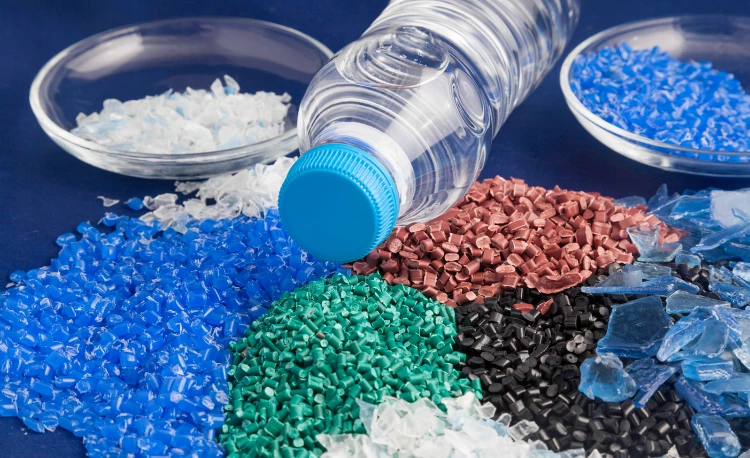
Color alone cannot tell a recycling plant what a plastic item is made of. A transparent PET bottle and a transparent HDPE container may look almost identical to the human eye, yet they belong to different material streams and require different recycling processes.
This is where NIR Plastic Sorting becomes valuable. Instead of simply looking at visible color, near-infrared technology analyzes how different polymers respond to near-infrared light, allowing sorting systems to identify material composition and automate polymer separation.
What Is NIR Plastic Sorting?
NIR stands for Near-Infrared.
In a plastic sorting system, NIR sensors illuminate material with near-infrared light and analyze the reflected spectral response. Because different polymers have different spectral characteristics, the system can use these differences to classify materials.
Unlike conventional color sorting, which primarily asks:
“What does this plastic look like?”
NIR sorting asks:
“What material does this plastic’s spectral signature indicate?”
That distinction makes NIR particularly valuable for identifying polymers such as PET, PP, PE and HDPE.
Why Can’t Color Replace Polymer Identification?
This is one of the most important concepts in understanding NIR Plastic Sorting.
Consider a transparent PET bottle and a transparent HDPE container.
Visually, both could be:
- Transparent
- Clear
- Light-colored
But their polymer compositions are different.
A color sorter cannot reliably determine their polymer identity from appearance alone.
The opposite is also true. The same polymer can appear in many colors:
- Clear PET
- Blue PET
- Green PET
- Colored PET
Therefore:
Color is not the same as polymer identity.
This is why industrial plastic recycling often separates visible-color detection from material identification.
How Does NIR Identify Different Plastics?
The basic NIR sorting process consists of several stages.
1. Near-Infrared Illumination
The system directs near-infrared light toward plastic moving across a conveyor.
2. Spectral Detection
Sensors measure the reflected near-infrared response from the material.
Different polymers produce different spectral characteristics because of differences in their molecular structure.
3. Material Classification
The system compares the detected spectral information with predefined material models and determines the likely polymer category.
4. Automatic Separation
Once the target material has been identified, the sorting system directs it toward the appropriate product or reject stream through an automated ejection mechanism.
The process can therefore be summarized as:
NIR Detection → Spectral Identification → Polymer Classification → Automatic Ejection
Which Plastics Can NIR Sorting Identify?
NIR technology is particularly useful for distinguishing polymers.
Common targets include:
| Plastic | Typical Sorting Objective |
|---|---|
| PET | PET vs. non-PET |
| HDPE | HDPE identification |
| PP | PP identification |
| PE | PE separation |
| Mixed plastics | Polymer classification |
| PET bottles | PET recovery |
| Plastic packaging | Material separation |
The actual identification range depends on the sensor configuration, software, material presentation and application.
For example, NIR systems can identify target PET through its characteristic near-infrared response and direct it into a dedicated PET recovery stream. Industry guidance describes this as a core application of NIR sorting in plastic recycling.
Why Is NIR Important for Plastic Recycling?
Plastic recyclers generally need to balance two critical objectives:
Purity and Recovery.
If the product stream contains too much of the wrong polymer, the quality and value of the recycled material can suffer.
But if the system rejects too aggressively, valuable target material can also be lost.
The goal of an effective NIR Plastic Sorting Machine is therefore not simply to reject as much as possible. It is to balance material purity, recovery and throughput according to the plant’s production requirements.
Higher Material Purity
Polymer-level identification can reduce the amount of unwanted material entering a target product stream.
Better Material Recovery
More accurate target identification can reduce unnecessary rejection of valuable material.
Reduced Manual Sorting
Automated polymer identification can reduce the amount of repetitive material classification required from operators.
More Consistent Output
A properly configured automated system applies consistent sorting rules throughout production, helping stabilize output quality.
What Factors Can Affect NIR Sorting Accuracy?
NIR technology does not perform identically under every operating condition.
Several factors can affect actual results.
Material Presentation
If plastic items overlap heavily on the conveyor, the sensor may not receive enough useful surface information to classify the target accurately.
Stable material presentation is therefore critical.
Labels and Surface Coverage
Labels can cover a significant portion of a bottle or container and interfere with the NIR signal.
Industry guidance notes that large label coverage, metallic coatings and metallic pigments can interfere with the detection of PET beneath the label.
Dark Plastics
Some dark plastics can absorb more NIR energy, reducing the reflected signal available to the sensor.
Therefore, simply installing an NIR sensor does not guarantee identical detection performance across every plastic color and formulation.
Particle Size and Shape
Very small items provide less surface area for detection.
Small, round containers can also be difficult to stabilize on the conveyor, which may affect both detection and downstream air-jet ejection.
NIR Sorting vs. Color Sorting: What’s the Difference?
NIR and color sorting are often used within the same recycling facility, but they rely on different detection principles.
| Comparison | Color Sorting | NIR Sorting |
|---|---|---|
| Main signal | Visible appearance | Near-infrared spectral response |
| Color recognition | Excellent | Not the primary purpose |
| Polymer identification | Limited | Stronger |
| PET identification | Possible through visual rules | Suitable for material identification |
| PP / PE separation | Limited by appearance | More suitable |
| Visible defects | Strong | Not the primary purpose |
| Material composition | Indirect | Directly related to spectral response |
NIR should therefore not be viewed as a universal replacement for color sorting.
A more practical approach is to combine sensing technologies according to the material stream and desired output.
Modern plastic sorting equipment increasingly combines NIR, color sensors and AI/vision technologies to address material identification, color separation and complex visual characteristics within automated recycling lines.
When Should a Recycling Plant Choose NIR Sorting?
NIR deserves serious consideration when the primary challenge involves:
Mixed Polymer Separation
When different polymer types are mixed together, visual color alone is usually insufficient for reliable material classification.
PET Recovery
For PET bottle recycling, NIR can identify PET and distinguish it from non-PET materials.
Higher Recycled Material Purity
When downstream processors require tighter material specifications, polymer-level identification becomes increasingly important.
Automated High-Volume Processing
For large-scale continuous operations, automated NIR sorting can reduce the need for manual polymer identification.
However, the decision should not be based on the machine name alone. Representative samples should be tested to determine whether the system can meet the actual purity, recovery and throughput requirements.
What Should Buyers Ask an NIR Sorter Manufacturer?
When purchasing an NIR Plastic Sorting Machine, buyers should ask:
- Which polymers can the system identify?
- What feed-size range does it support?
- What throughput can it achieve with the actual feed material?
- How does it handle labels and contaminated surfaces?
- Can it identify dark or black plastics?
- What purity and recovery rates can reasonably be expected?
- What ejection technology is used?
- How often do sensors require cleaning and calibration?
- Can the supplier conduct application testing?
- Can the sorter integrate with the existing conveyor and recycling line?
These questions are generally more useful than simply asking how advanced the machine’s AI is.
Why Consider APEX Sorting for NIR Plastic Sorting?
The value of NIR technology ultimately depends on whether it can solve the material-identification challenges found in an actual recycling operation.
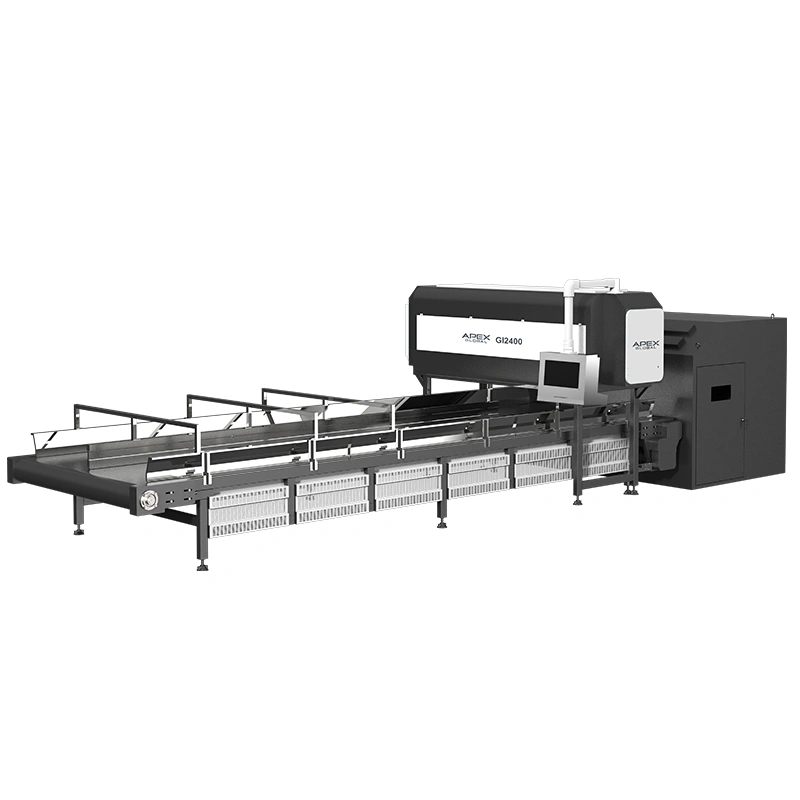
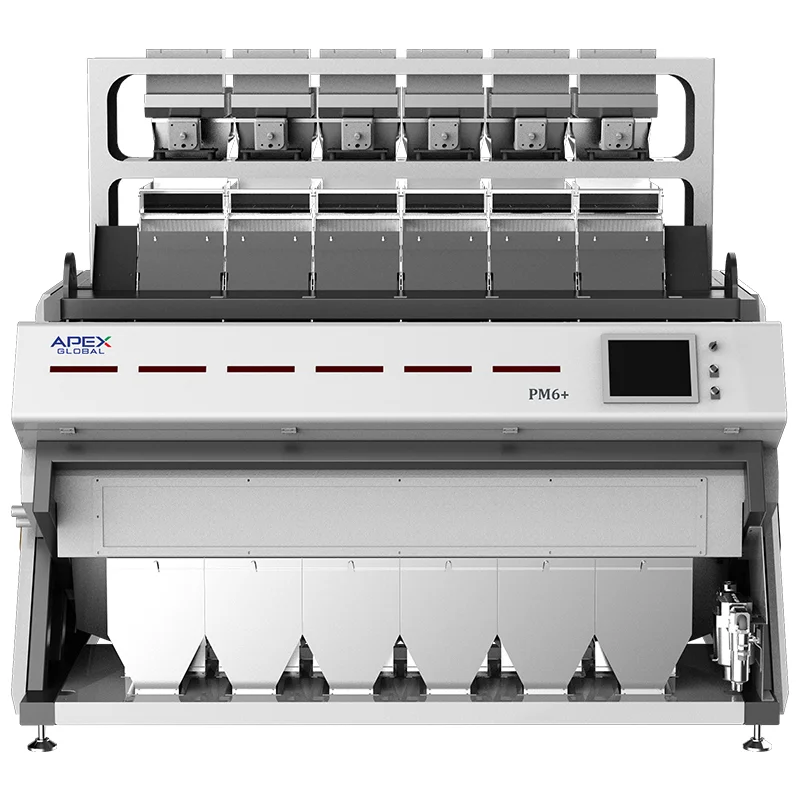
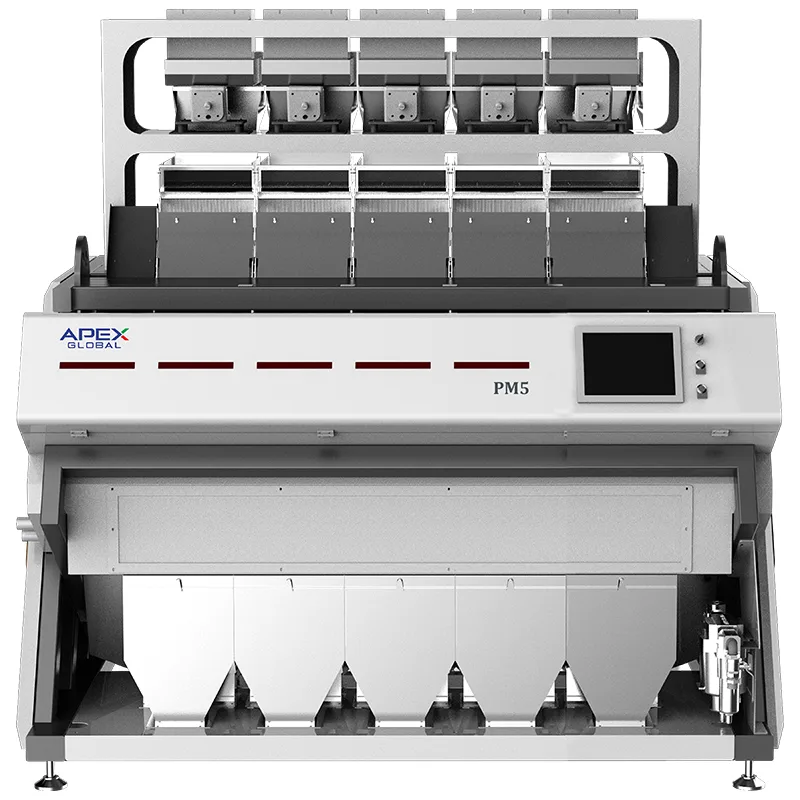
APEX Sorting provides intelligent sorting solutions for plastic recycling, including NIR-based plastic sorting technology designed for automated material separation.
For recycling plants that need to identify different polymers in mixed plastic streams, reduce manual material sorting or improve recycled-material purity, explore the APEX Sorting NIR Plastic Sorting Machine and evaluate the solution using representative production samples.
FAQ
What is NIR Plastic Sorting?
NIR Plastic Sorting uses near-infrared sensing to identify plastic materials according to their spectral response and automatically separate different material streams.
Can NIR distinguish PET, PP and PE?
NIR is commonly used for polymer identification and can support separation between materials such as PET, PP and PE, depending on equipment configuration and application conditions.
Is NIR better than color sorting?
Neither technology is universally better. Color sorting is effective for visible characteristics, while NIR is more suitable for identifying material composition. Advanced systems can combine both.
Can NIR identify black plastic?
Dark plastics can be more challenging because certain pigments absorb NIR energy and reduce the reflected signal. Actual performance should therefore be verified with representative samples.
Does NIR sorting replace manual sorting?
NIR can automate a significant portion of repetitive polymer identification and separation, although manual quality control may still be appropriate depending on the material stream and output specification.
What is the most important factor when choosing an NIR plastic sorter?
Application fit is the most important factor. Buyers should test representative materials and evaluate polymer identification, purity, recovery, throughput and operational stability under real conditions.