






How Does a Coffee Color Sorter Identify Defective Coffee Beans?
Release time: 2026-11-04
Table of Contents
Coffee beans entering a processing plant rarely have perfectly uniform appearances. Differences in maturity, drying, handling, and storage can lead to visible defects that affect the quality of the finished batch.
A coffee color sorter uses optical imaging and automated rejection technology to inspect beans individually, helping processors maintain more consistent sorting standards at production scale.
Why Do Coffee Beans Need Optical Sorting?
The appearance of coffee beans is influenced by growing conditions, harvesting maturity, drying methods, storage environments, and post-harvest handling. Even beans from the same lot can show noticeable visual differences.
Common sorting concerns include:
- Abnormal coloration: immature beans, over-fermented beans, and beans with unusual discoloration.
- Surface damage: broken beans, cracks, insect marks, and other visible damage.
- Shape irregularities: severely deformed or underdeveloped beans that do not meet grading requirements.
- Foreign materials: non-coffee particles or impurities with distinguishable visual characteristics.
These materials can affect batch consistency and the appearance of the final product. For processors handling large volumes, optical sorting reduces reliance on continuous manual inspection.
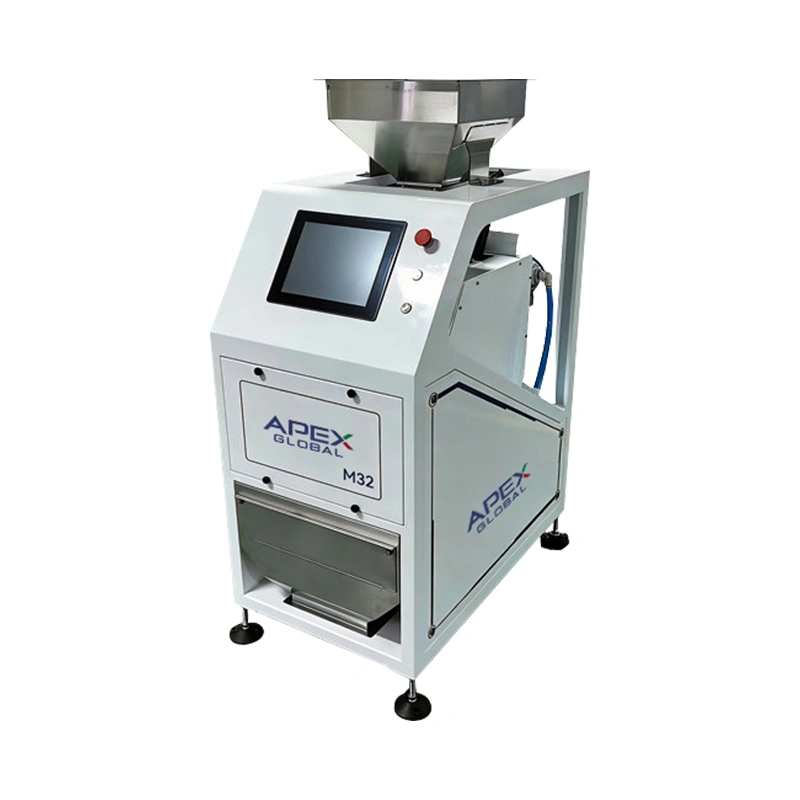
How Does a Coffee Color Sorter Identify Defects?
1. Feeding Beans into the Inspection Area
Coffee beans first enter the machine through a hopper and feeding system. A vibratory feeder is commonly used to regulate the material flow and distribute beans along the designated channels.
Consistent feeding is essential. If beans overlap, accumulate, or move unevenly, the imaging system may not capture clear images of individual beans. This makes material distribution an important part of the overall sorting process.
2. Capturing Visual Information Through Optical Imaging
As beans pass through the inspection area, the optical imaging system captures their visible characteristics. Depending on the machine configuration, these characteristics may include color, brightness, shape, and surface texture.
Color information is particularly useful when a defect produces a noticeable difference from normal beans. For example, unusually dark, pale, or discolored beans may present visual features that can be detected by the system.
However, not every defect has a distinct color signature. Internal damage or defects with very subtle external differences may not be reliably identified through conventional visible-light imaging alone.
3. Analyzing Images Against Sorting Criteria
Captured images are processed by the machine’s image analysis system. Based on configured recognition rules or algorithms, the system evaluates whether each bean meets the selected sorting criteria.
The actual criteria should reflect the processor’s raw material, target grade, and quality requirements. A plant may prioritize the removal of certain discoloration patterns while allowing minor natural variations that do not affect its commercial standards.
A key distinction is that the machine does not make an abstract judgment about whether a bean is universally good or bad. It determines whether the bean should be rejected according to the sorting standards configured for the application.
4. Removing Selected Beans with an Ejection System
When the system identifies a bean that does not meet the configured criteria, it sends a control signal to the corresponding rejection mechanism. Pneumatic ejectors are commonly used to divert selected beans from the main material stream.
Accepted beans and rejected materials then enter separate collection channels. By adjusting recognition thresholds and ejection settings, processors can balance product quality against the loss of acceptable beans.
Watch APEX Roasted Coffee Bean Color Sorting Demo Video
This demo video shows how APEX coffee color sorter processes roasted coffee beans. Follow the complete optical sorting workflow: bean feeding, CCD visual inspection, AI-powered defect analysis, and air ejection.
APEX sorter automatically identifies and removes contaminants including corn kernels, under-roasted beans and defective green beans from roasted coffee batches.
- Choose the compact M32+AI mini color sorter if you are a specialty coffee roaster running small-batch production, lab testing or sample inspection.
- For industrial-scale green coffee processing and bulk Arabica & Robusta production, our high-throughput A+AI Series delivers stable, round-the-clock sorting for large coffee exporters and processing plants.
Whether you operate a small roasting workshop or a large coffee processing factory, submit your coffee samples for a free sorting test to validate sorting performance for your material.
What Factors Affect Sorting Accuracy?
| Factor | Potential Effect | Practical Consideration |
|---|---|---|
| Raw material moisture | May change surface appearance and color | Maintain stable material conditions |
| Feeding consistency | Overlapping beans can interfere with imaging | Optimize feeding and distribution |
| Visual contrast | Similar-looking defects are harder to distinguish | Test representative samples |
| Optical configuration | Determines the visual information available | Match the inspection setup to target defects |
| Sorting parameters | Affect rejection decisions and good-bean loss | Fine-tune using actual production samples |
Why Is Sample Testing Important?
Coffee beans from different origins, varieties, processing methods, and roasting levels can have substantially different appearances. Even the same defect category may look different across batches.
For this reason, a machine’s advertised capabilities should not be the only basis for a purchasing decision. Testing representative samples provides a more practical way to evaluate whether the equipment meets a processor’s requirements.
A useful test should include:
- The removal performance for target defects.
- The percentage of acceptable beans mistakenly rejected.
- Processing capacity under the tested conditions.
- Sorting stability across different raw material batches.
These results help processors assess whether a machine is suitable for their actual production environment.
Choosing the Right Coffee Sorting Equipment
When selecting a coffee color sorter, processors should consider raw material type, target defects, throughput requirements, optical configuration, and production line layout. Companies handling both green and roasted coffee beans should evaluate the two applications separately rather than assuming that one set of parameters will suit both.
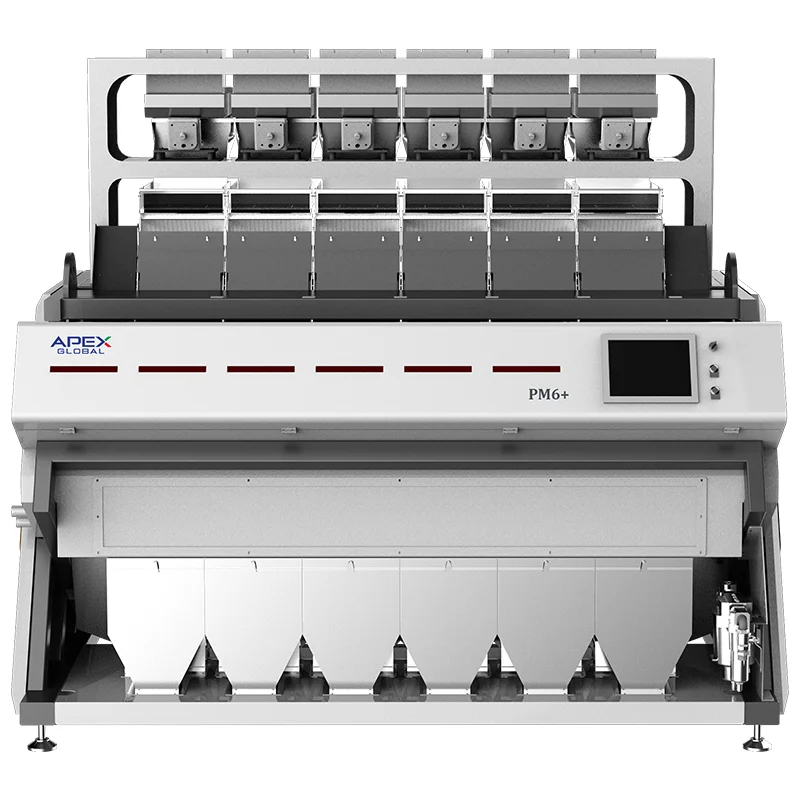
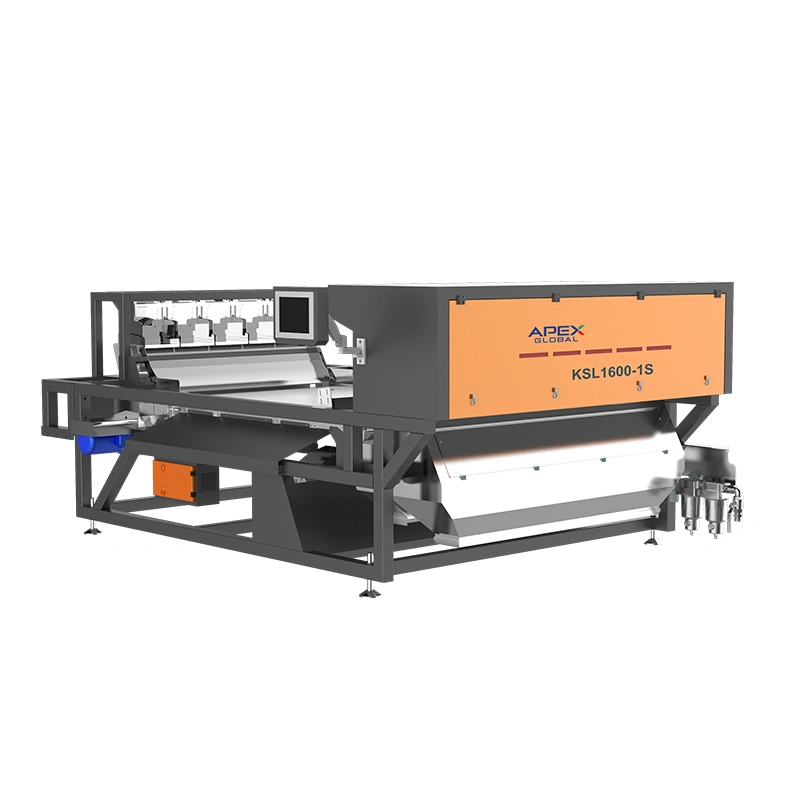
APEX offers coffee sorting equipment for green and roasted coffee bean applications. Processors can evaluate suitable configurations using their own samples and quality standards.
Explore the Coffee Color Sorter Machine range or contact APEX to discuss a suitable sorting solution.
Frequently Asked Questions
How does a coffee color sorter detect defective beans?
It typically captures visual information such as color, brightness, shape, and surface characteristics through optical imaging. Image processing then evaluates each bean against configured sorting criteria.
Can a coffee color sorter detect every type of defect?
No. Detection depends on whether a defect has identifiable visual characteristics, as well as the machine’s optical configuration, algorithms, and settings. Internal defects may not be visible through conventional optical imaging.
How are defective coffee beans removed?
Once a target bean is identified, the machine activates the corresponding rejection mechanism. Pneumatic ejection is commonly used to separate selected beans from the main product stream.
Should coffee samples be tested before purchasing a sorter?
Yes. Testing actual samples helps evaluate defect removal, acceptable-bean loss, and processing capacity under conditions closer to the intended application.