








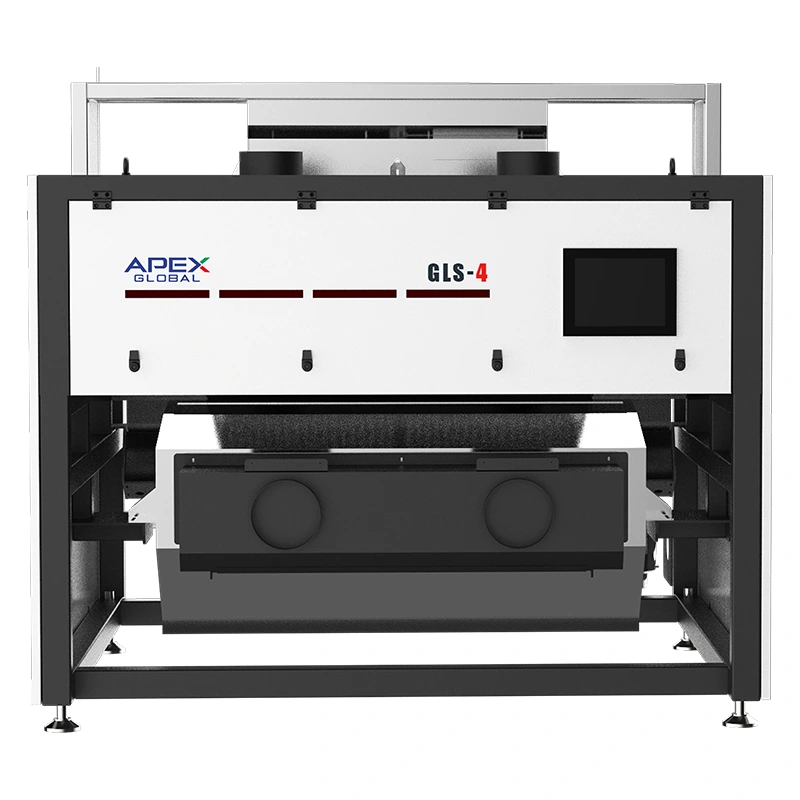
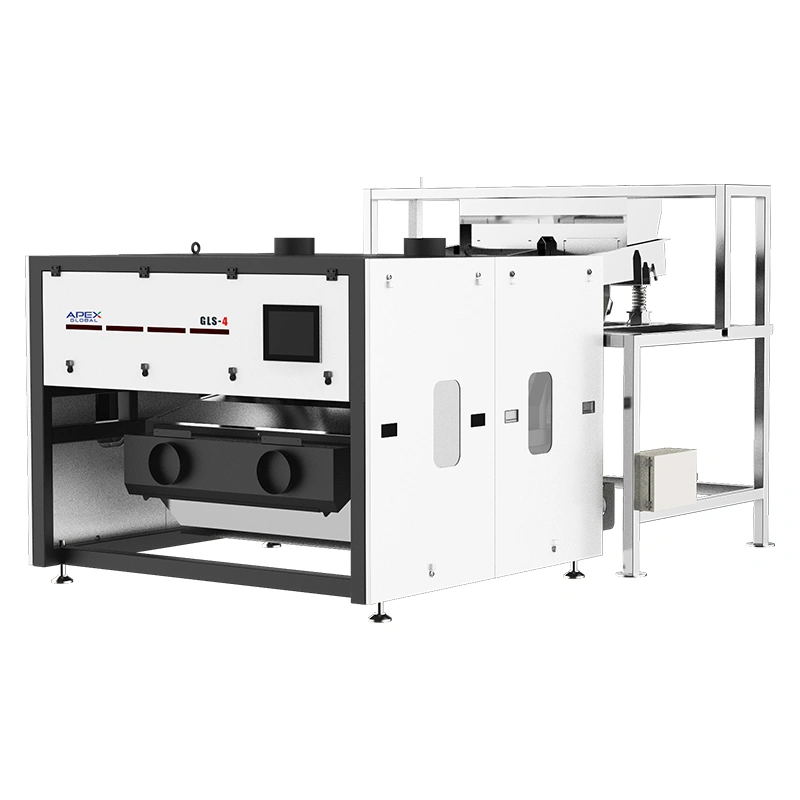
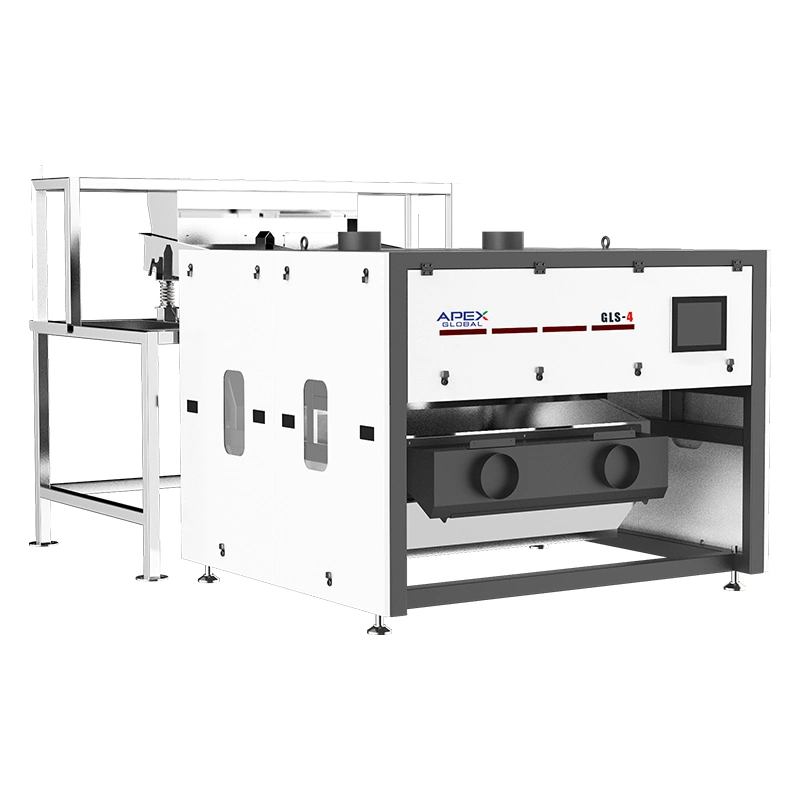
GLS-4 Series Vertical Special Dry Waste Glass Sorting Machine
Specs & Features: CCD Visual Sorting for Fully Dry Crushed Waste Glass Only
APEX Optical AI Vision Waste Glass Cullet Sorter for CSP Removal
Key Advantages
- Custom Optical Detection Algorithm for Glass Scrap
- Anti-Scratch & Anti-Breakage Gentle Vertical Feeding Structure
- Strong Compatibility for Large-Scale Dry Glass Recycling
- Exclusive Dry-Glass-Oriented Sorting Solution
Products Center
Contact Us
- Phone: +86 18815515040
- Email: info@apexitec.com
- WhatsApp: +86 18815515040
- Address: No. 789 Mingchuan Road, Boyan Tech Park, Hefei, Anhui, China
Product Introduction
APEX Glass Cullet Sorter Features
The GLS-4 series is a professional vertical optical sorter customized solely for dry waste glass recycling and dry glass scrap purification. This unit is strictly limited to processing completely dry glass feedstock; wet or damp glass materials cannot achieve stable and qualified sorting results on this machine (Wet glass must use our wet-dry dual-purpose belt type ore sorting equipment).
Custom Optical Detection Algorithm for Glass Scrap
Tuned exclusively to the optical characteristics of transparent, tinted and stained glass fragments, the detection system precisely separates colored glass, contaminated glass, oxide-defective glass particles and mixed foreign impurities.
Anti-Scratch & Anti-Breakage Gentle Vertical Feeding Structure
The optimized soft vertical drop feeding structure reduces violent particle collision, surface scratching and secondary glass breakage during sorting. It preserves the integrity of recycled glass fragments and minimizes valuable material loss for recycling plants.
Strong Compatibility for Large-Scale Dry Glass Recycling
It fits all common types of crushed waste glass and granular glass scraps, steadily eliminating color contamination, surface stains and mixed foreign impurities under long-term high-throughput continuous production.
Exclusive Dry-Glass-Oriented Sorting Solution
Built exclusively for dry glass regeneration workflows, the equipment greatly lifts the purity and commercial grade of finished recycled glass. It acts as the ideal sorting equipment for waste glass recycling factories and high-value glass material regeneration projects.
Parameters of Glass Cullet Sorter
| Model | GLS-4 | GLS-6 |
| Capacity (t/h) | 1-3cm; 10-15 | 1-3cm; 15-20 |
| Voltage (V/Hz) | 220/50 | 220/50 |
| Power (kw) | 5.2 | 7 |
| Air pressure (Mpa) | 0.6-0.8 | 0.6-0.8 |
| Air consumption (m³/min) | ≤4 | ≤5 |
| Weight (kg) | 1560 | 1850 |
| Dimension (mm) | 3285*2470*1905 | 3285*3090*1905 |
Performance Comparison
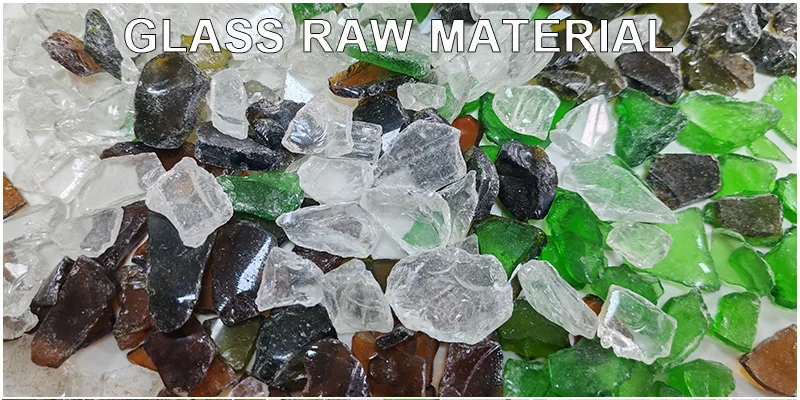
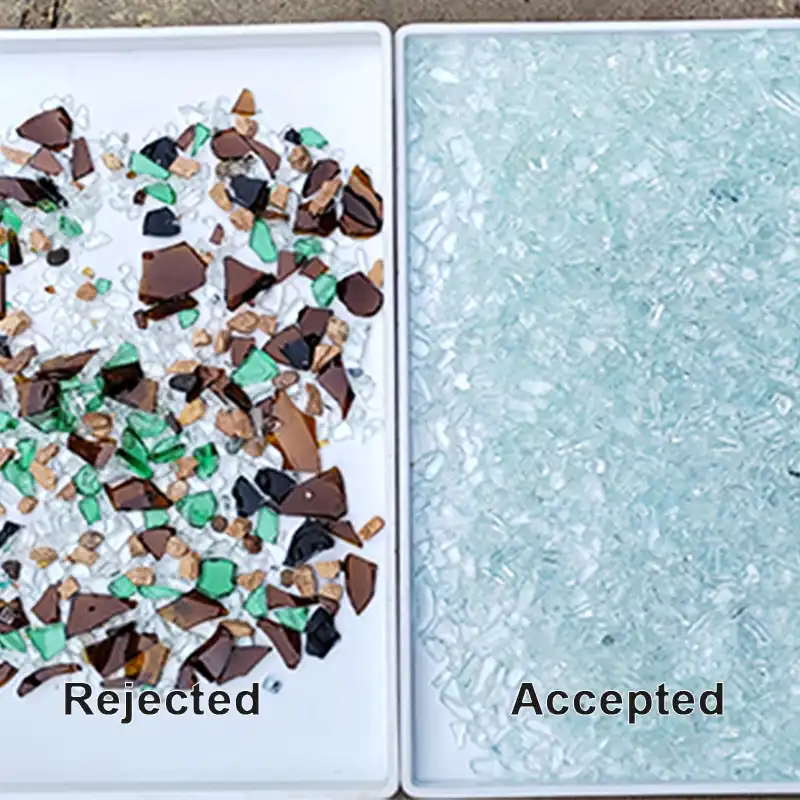
BEFORE SORTING
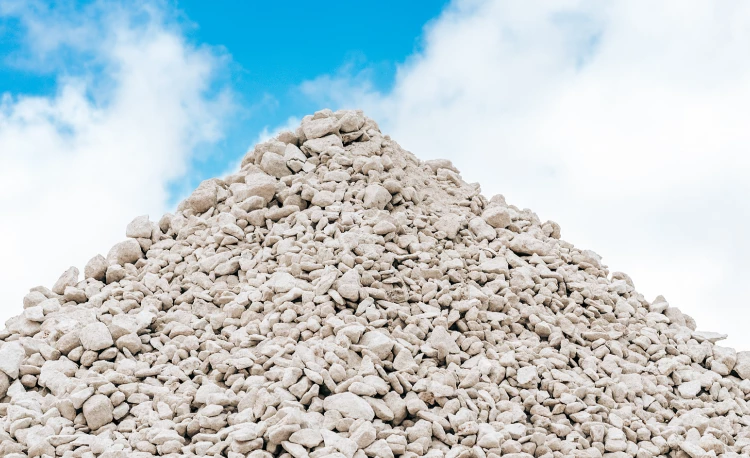
Mixed dry broken waste glass containing chaotic amber, green and transparent white glass fragments.
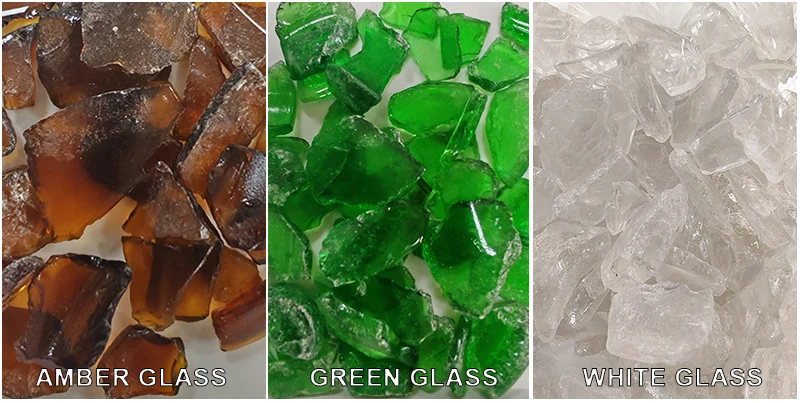
AFTER SORTING
AMBER GLASS: High-purity single-color brown/green/white glass separated out without foreign glass impurities.
Applicable Sorting Materials
Specially optimized for all types of fully dry crushed waste glass fragments, including transparent white glass, green glass, amber brown glass and mixed stained dry glass scraps. Equipped with glass exclusive optical algorithm, it accurately sorts heterochromatic glass, oxide contaminated glass and mixed foreign impurities.
Important note: This machine only supports completely dry glass feedstock. Wet, damp or water-washed glass cannot run stably; wet glass sorting requires our wet-dry universal ore sorting machine.
Applications
GLS-4 vertical dry glass sorters serve dry waste glass recycling production lines only. Compact small-channel models fit small glass recycling workshops, while large-channel versions support high-throughput large-scale dry glass scrap classification plants. It effectively improves the purity and resale value of single-color dry glass for glass regeneration and raw material processing factories.
Service & Support
- Free dry glass material sorting test with sorting effect reportOn-site installation & commissioning
- Professional equipment operation & parameter debugging training
- Long-term supply of original spare parts
- Full-cycle remote after-sales technical guidance
Tags:
glass cullet sorter manufacturer glass cullet sorter price glass cullet sorter supplier recycling glass cullet sorter waste glass cullet sorterFAQS
-
Is the GLS-4 vertical sorting machine only applicable to 100% completely dry crushed glass fragments for stable operation?
Correct. The GLS-4 optical detection system relies on stable light transmittance of dry glass to finish accurate color classification. If damp, wet or water-rinsed glass fragments are fed directly, water film on the glass surface will trigger severe light refraction deviation, leading to fluctuating sorting precision, incomplete impurity removal and unstable finished glass purity. All wet glass materials must go through thorough pre-drying before feeding into GLS-4. For mass continuous sorting of un-dried wet glass scraps, our wet-dry dual-purpose crawler ore sorting equipment is the proper alternative solution.
-
Can the built-in glass-specific optical system identify and eject non-glass impurities like ceramic pieces, stone particles and metal scraps mixed in dry crushed glass in a single sorting pass?
Absolutely. Tuned to the unique light transmittance feature of glass fragments, the high-definition CCD detection system instantly captures the obvious light transmission gap between glass and opaque foreign sundries including ceramics, gravel stones, iron and non-ferrous metal particles. It can fully separate all non-glass mixed impurities in one single sorting run, effectively cutting manual re-sorting workload for dry glass recycling factories and upgrading the cleanliness of final recycled glass products.
-
What range of crushed glass fragment sizes is the GLS-4 vertical sorter optimized to handle for standard waste glass recycling production lines?
The GLS-4 feeding chute and optical detection area are specially optimized for mainstream crushed glass particle sizes generated by regular glass crushing equipment, covering fragments ranging from 3mm to 50mm. It maintains consistent sorting stability without material overflow, particle stacking or detection blind spots across the full size range, perfectly matching medium and large-scale dry waste glass crushing and regeneration production workflows.
-
Will the buffer vertical feeding structure of GLS-4 effectively reduce secondary breakage of fragile glass fragments during the whole sorting process?
Yes, the machine adopts low-impact buffer vertical drop feeding channels instead of steep hard collision chutes. This gentle conveying design drastically lessens fierce collision, surface scratching and secondary fragmentation of thin glass scraps when materials slide down for detection. It greatly lowers the loss rate of high-value qualified recycled glass fragments and maximizes finished material output profit for dry glass recycling processing plants.